An honest, sourced comparison of FastEditor and TronDesigner: where they overlap, and where preflight depth, production-ready output, data and pricing set them apart.
Nearly every customer logo arrives with a background that is not part of the brand. Here is how automatic background removal works, and when to remove it or keep it.
A flat color proof of an engraved product is a surprise waiting to happen. Here is how to proof engraving, laser marking and embossing so what the customer approves is what they receive.
Block a failed artwork check and you can lose the sale; warn too softly and you ship problems. Here is how to set each preflight check, by severity, method and partner.
Vectorize, upscale or leave it as raster? For full-color and gradient logos the right repair depends on the decoration method, and the final call belongs to the customer.
Text is the part of a logo that breaks most silently in print. Here is how fonts behave from screen to print, why licensing limits your options, and how to keep brand type faithful.
A lot of editor usage happens before any purchase: quotes, visualizations, ERP orders entered by hand. Here is how to use the editor beyond checkout and get the files when there was no online sale.
A logo on a plain product photo and the same logo in a real-world scene do not convert the same. Here is what mood scenes are, why they sell, and the product data they need.
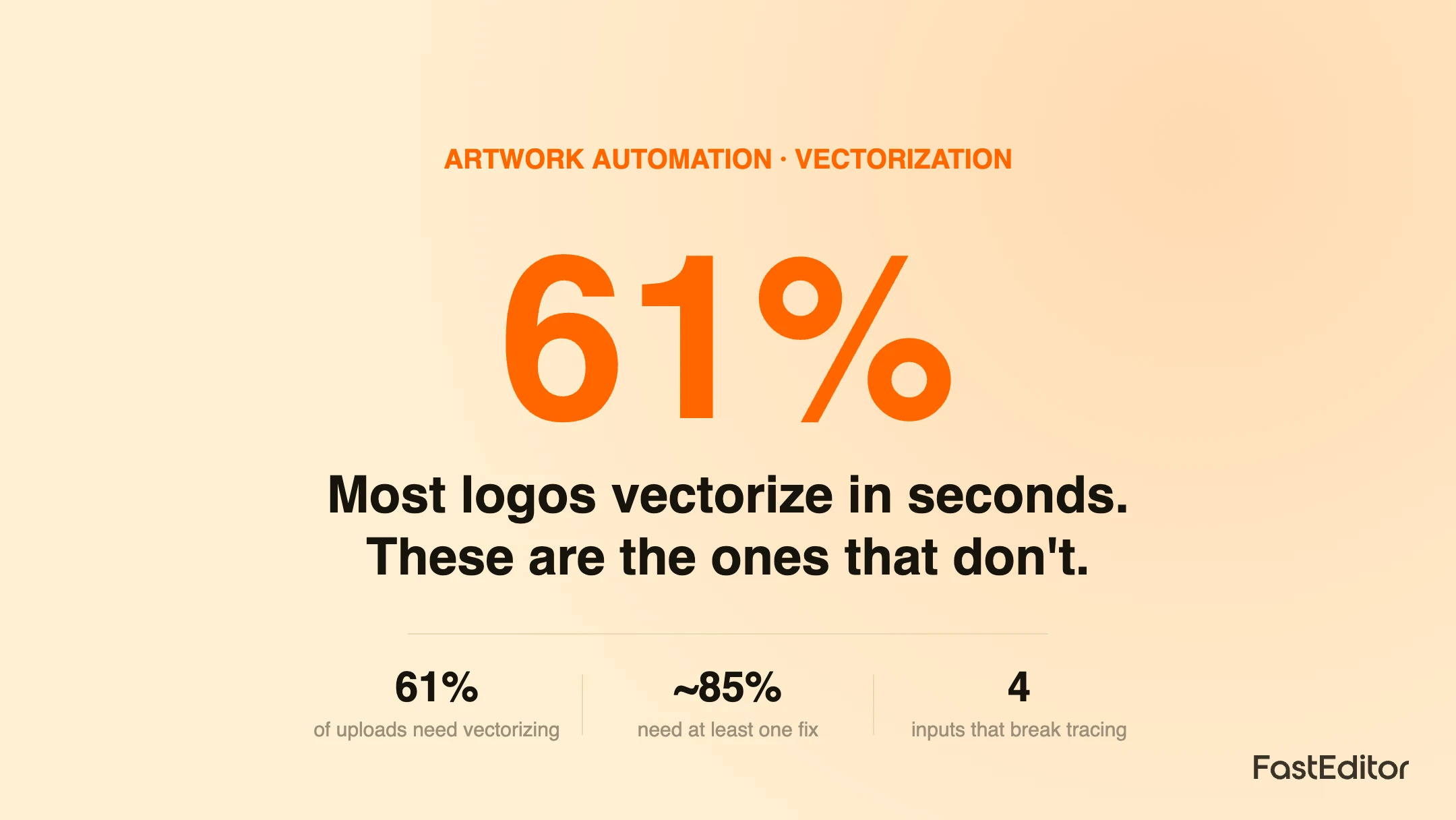
Most logos vectorize in seconds. Photographs, gradients, tiny text and files full of embedded images are the hard cases. Here is why they break tracing and how to fix each one.
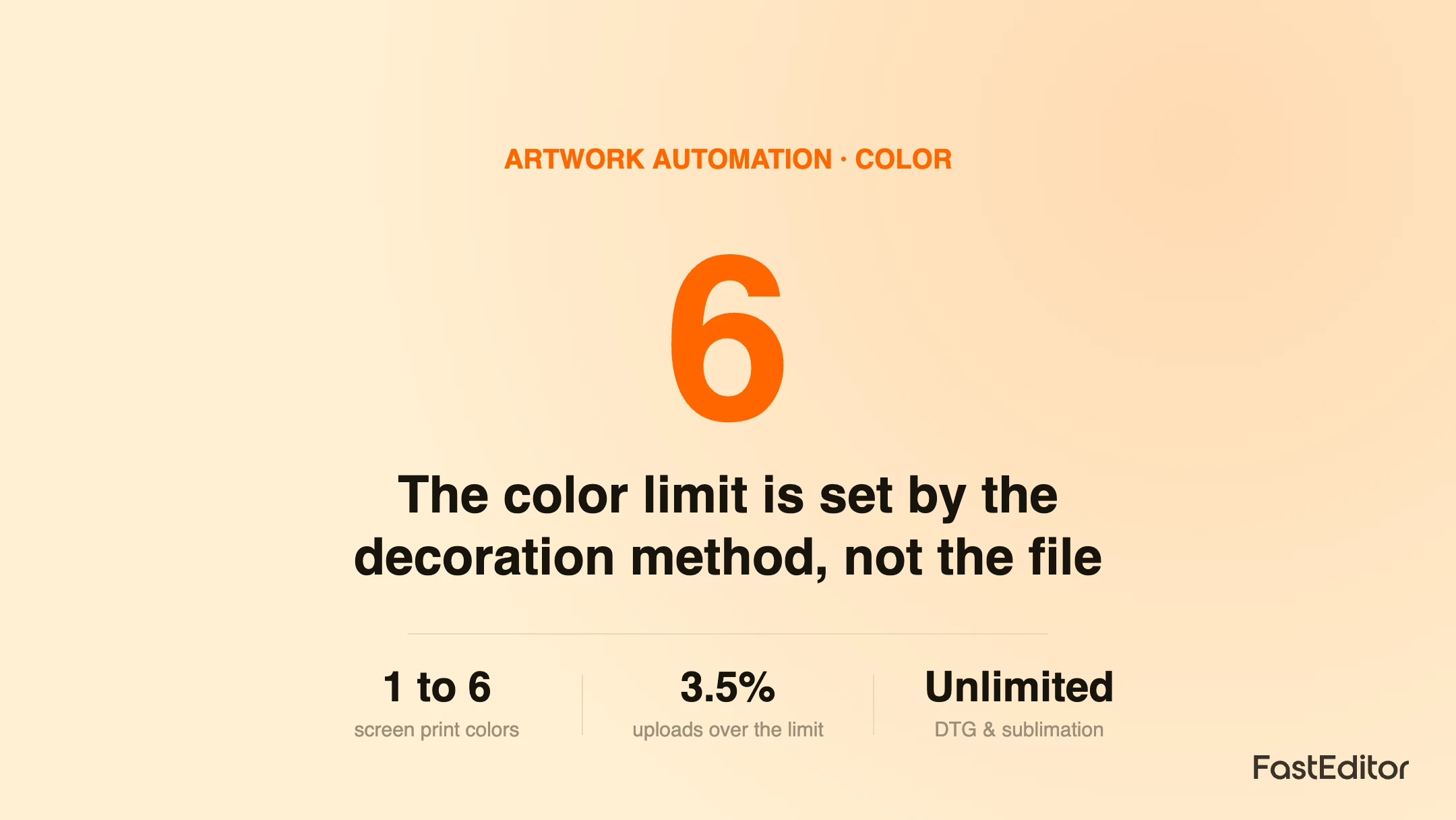
A logo that looks like three colors can measure as forty. Here is how color limits work by decoration method, why files get flagged, and how automation fixes it.
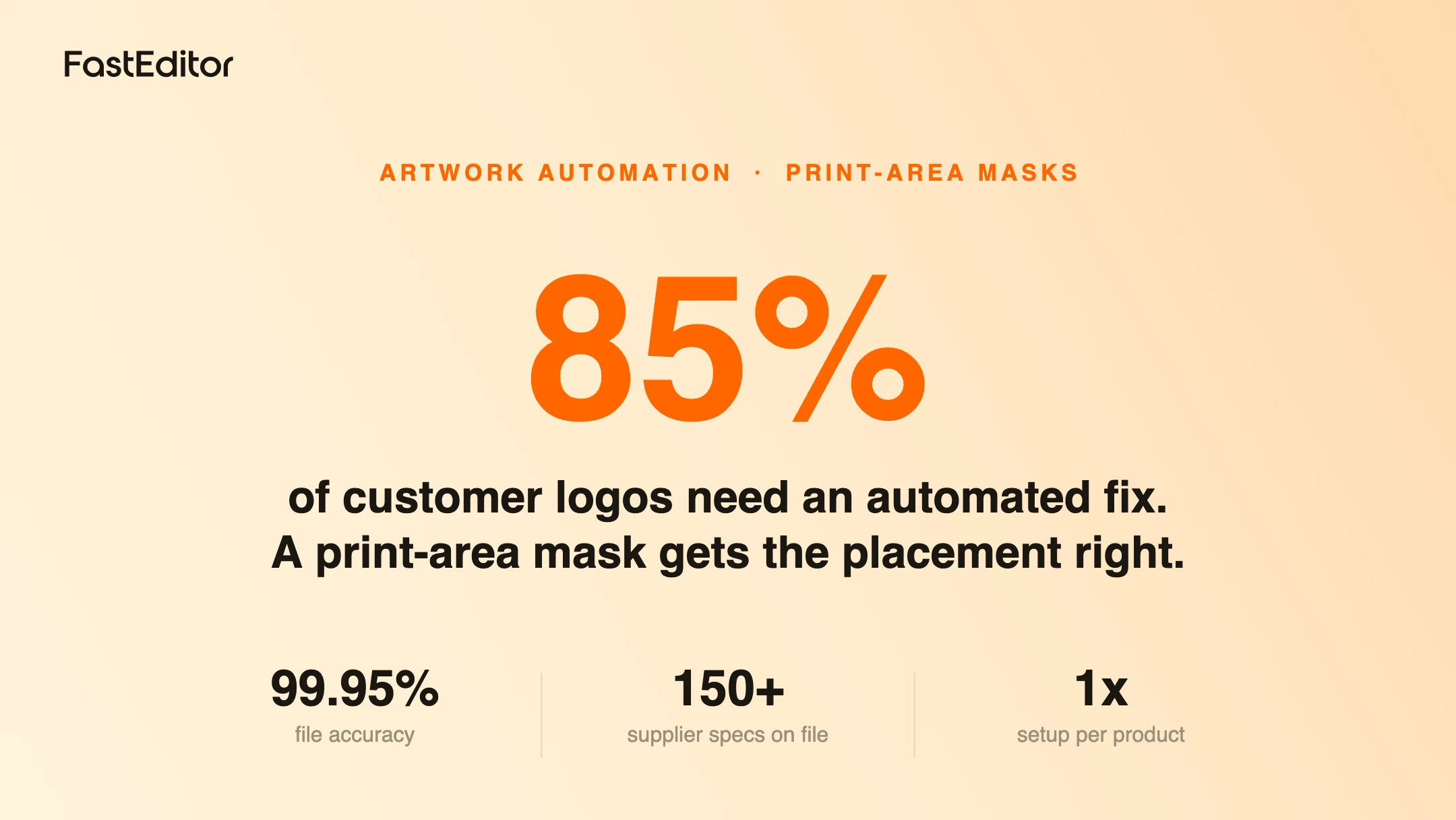
Most product print areas are not rectangles. Here is how a print-area mask keeps every customer design inside the real decoration zone, and how to set one up across a whole catalogue.
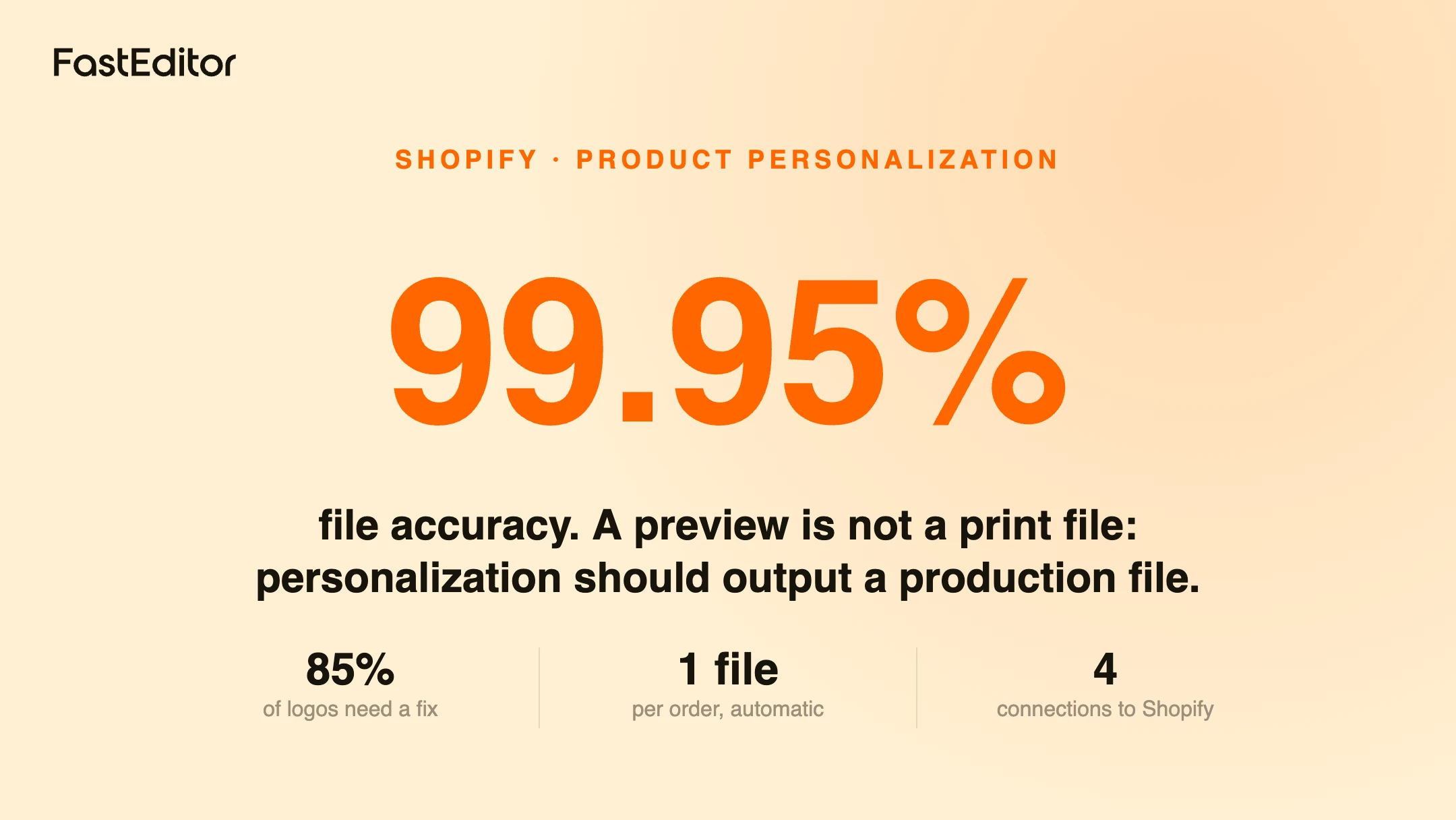
A live preview in your Shopify store is only half the job. If it does not output a production-ready file, someone still rebuilds every order by hand. Here is how to close that gap.
Workwear is not a tote bag. Fabrics, safety standards, and embroidery all change what print ready means. Here is how to decorate workwear and PPE at scale.
.webp)
A company store promises effortless on-brand ordering. Then artwork turns every order into a manual job. Here is how to scale the model without the bottleneck.
You do not have to route every order through a connected supplier to benefit from artwork automation. Here is how to use file prep on its own, get a clean production file, and send it anywhere.
JPEG, PNG, PDF, AI, EPS, SVG or a phone photo: what each file type means for print, and what automated artwork handling does with each before it reaches production.
An honest Design Huddle alternative comparison: a multi-format design and video platform versus automated vectorization, per-supplier spec validation, and production-ready file output for decorated products.
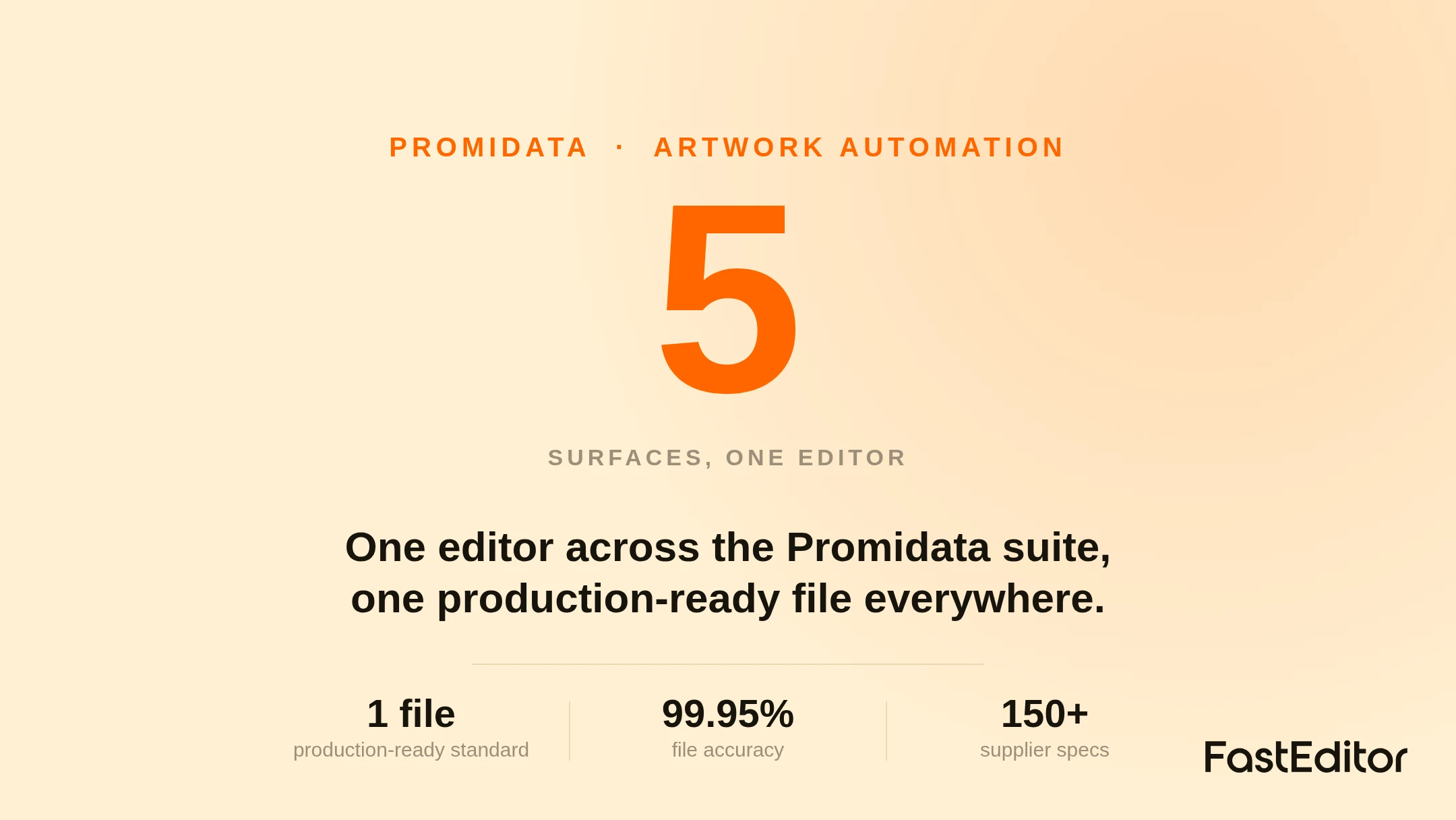
Artwork automation only pays off when it lives on every surface where a promo order begins. Here is how FastEditor plugs into Promidata's webshops, brand stores, supplier shops, SynQore ERP and Sourcing, and what it unlocks for customers.
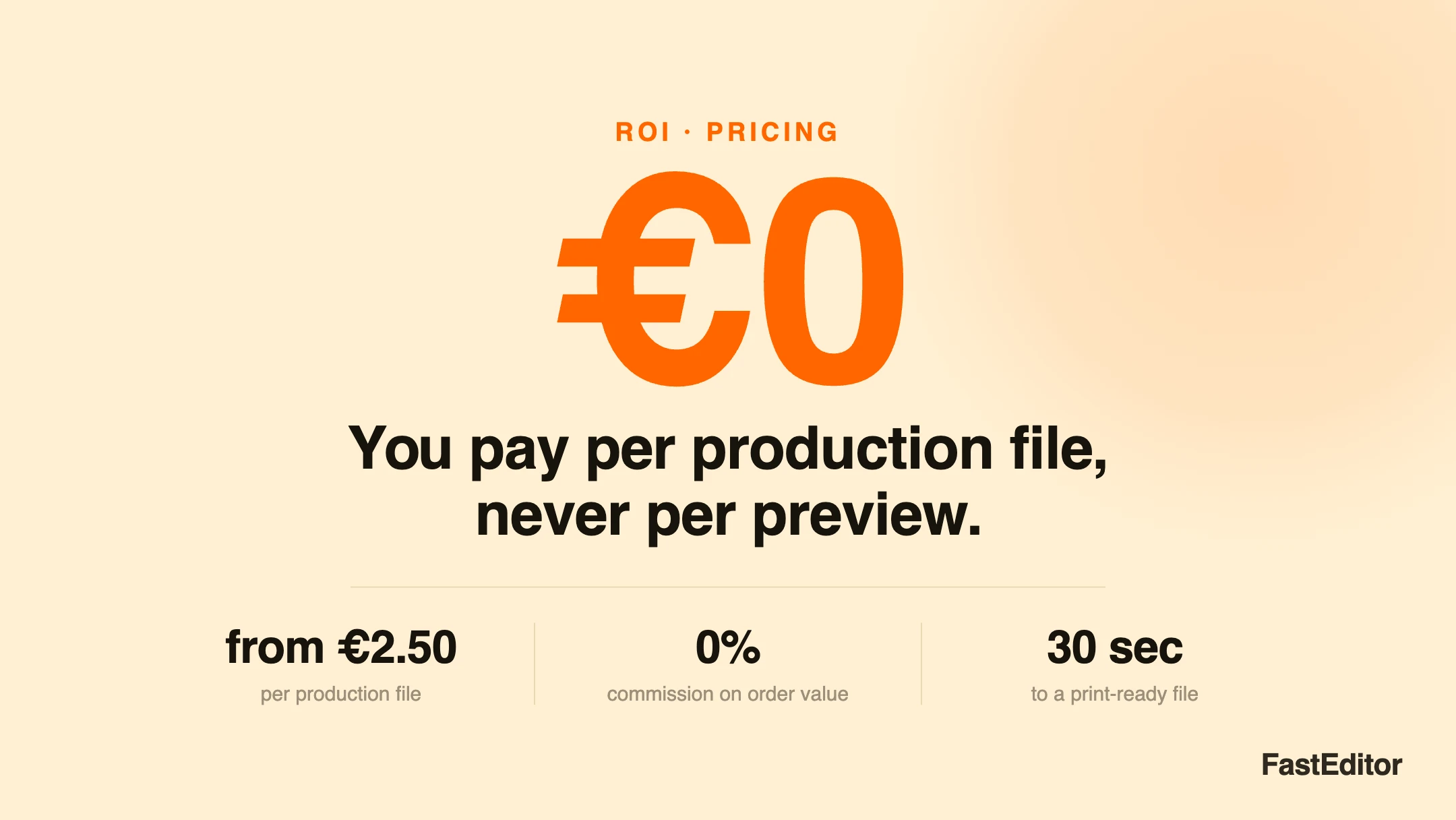
Does every design preview cost you money? Here is how per-file artwork automation pricing actually works, the models to compare, and how to calculate your real monthly cost.
.webp)
Configuring the same promotional product separately for every reseller and channel does not scale. Here is how listing a product once in the Product Hub makes it live across the Studio Tool, connected resellers, Promidata and European Sourcing.
.webp)
The proof is the last thing a customer sees before they approve. A branded, Pantone-accurate proof carrying your logo, colours and fonts builds trust and gets sign-off faster than a plain PDF ever will.
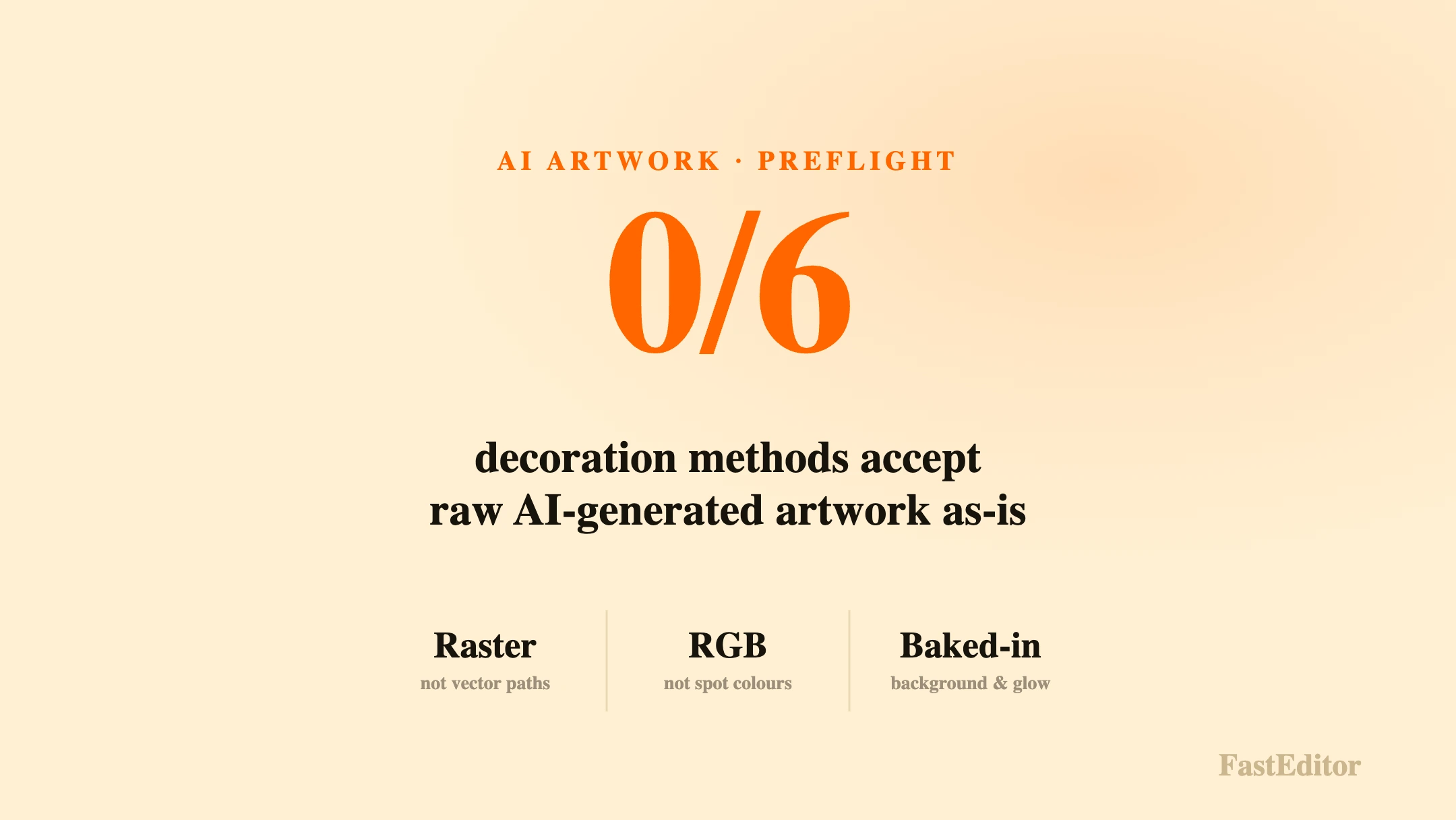
AI image generators produce striking artwork that looks print-ready on screen but rarely survives production. Here is what breaks across promo decoration methods, and how automation turns AI output into a file that runs first time.
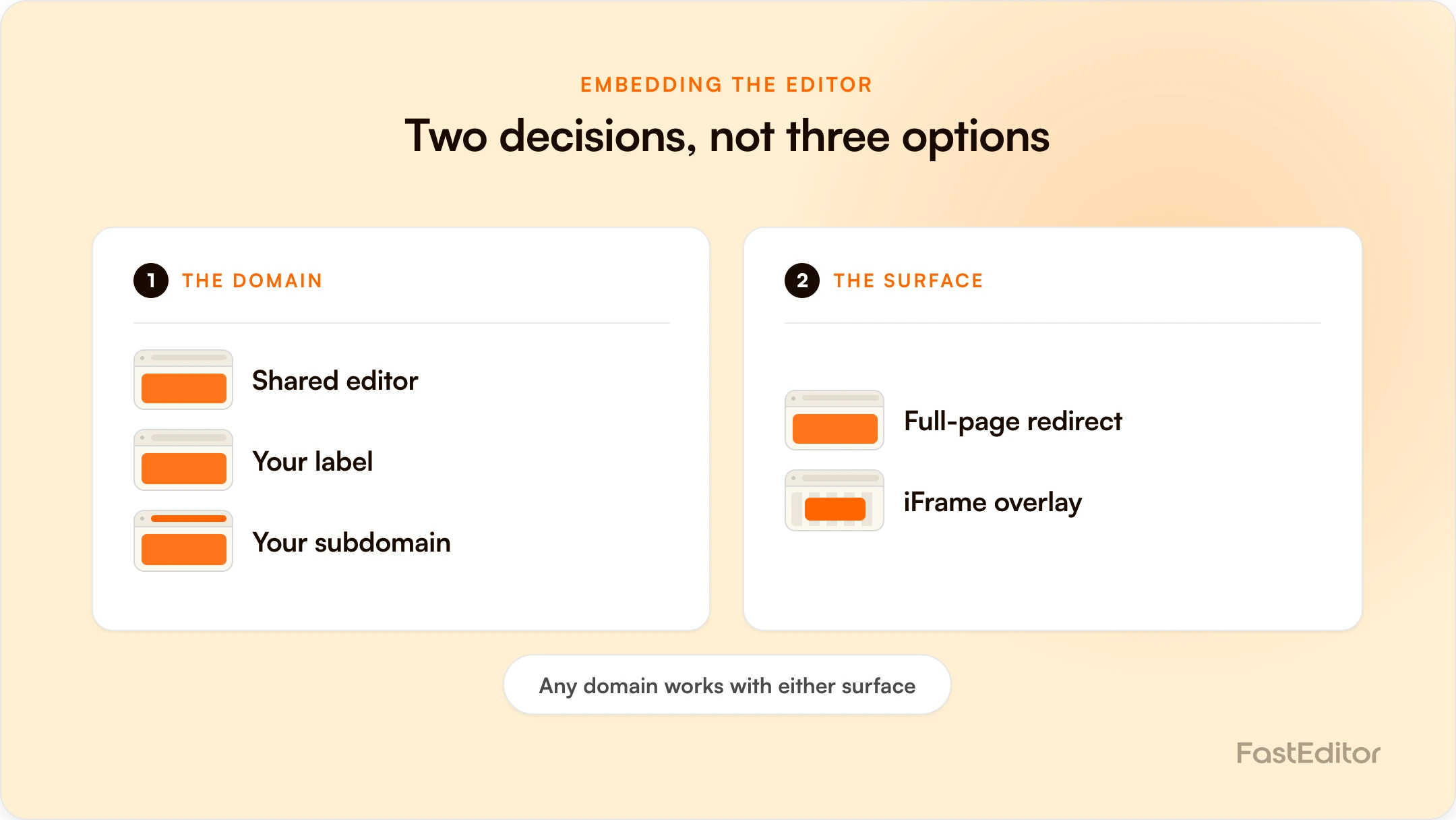
Where a personalization editor opens is really two decisions: which domain serves it, and whether it takes over the page or opens in an overlay. They are independent, and most teams collapse them into one.
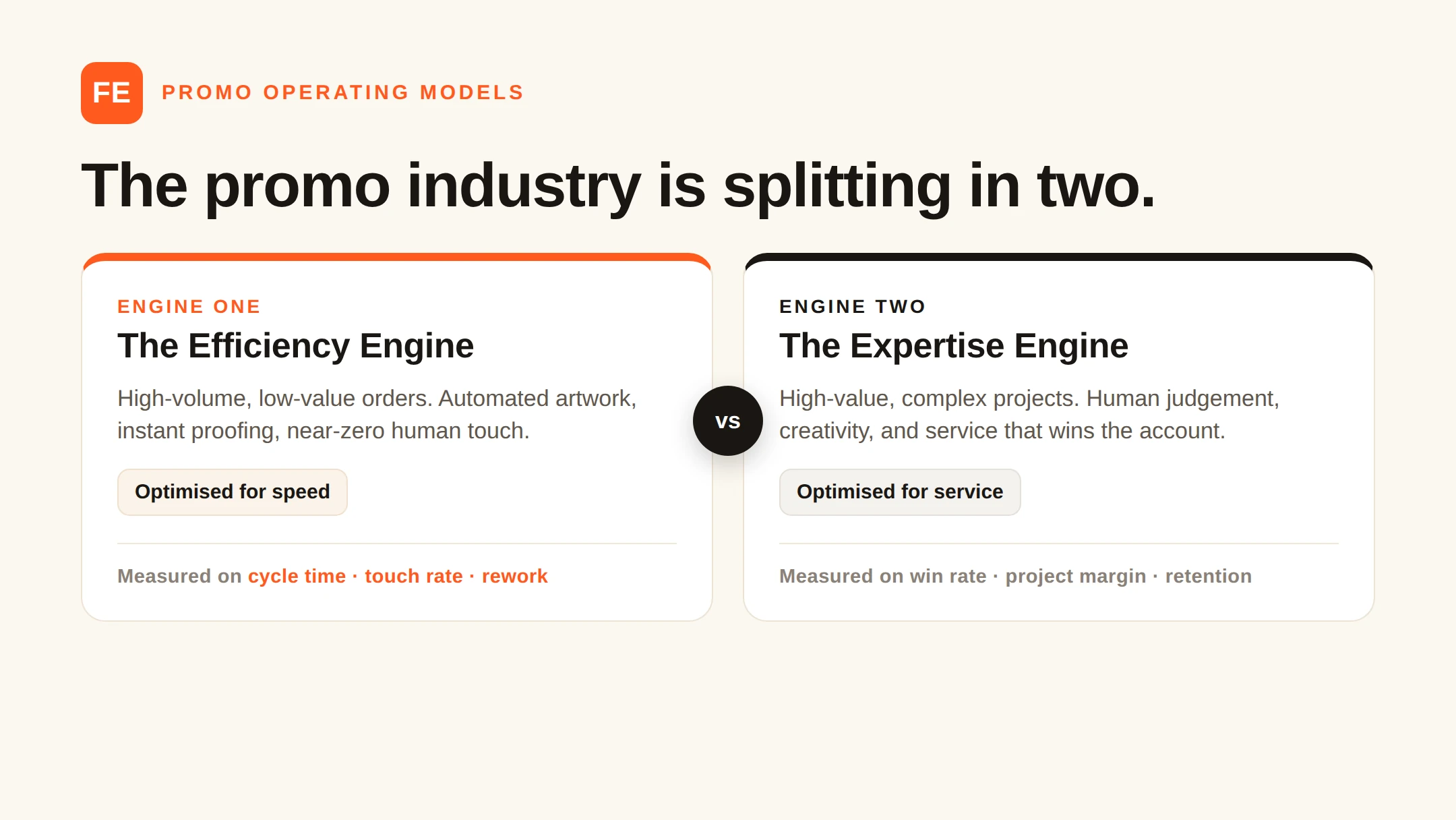
The promo market is separating into high-volume automated orders and high-value expert projects. Companies running one process for both are quietly losing margin. Here is how to build two engines inside one business.
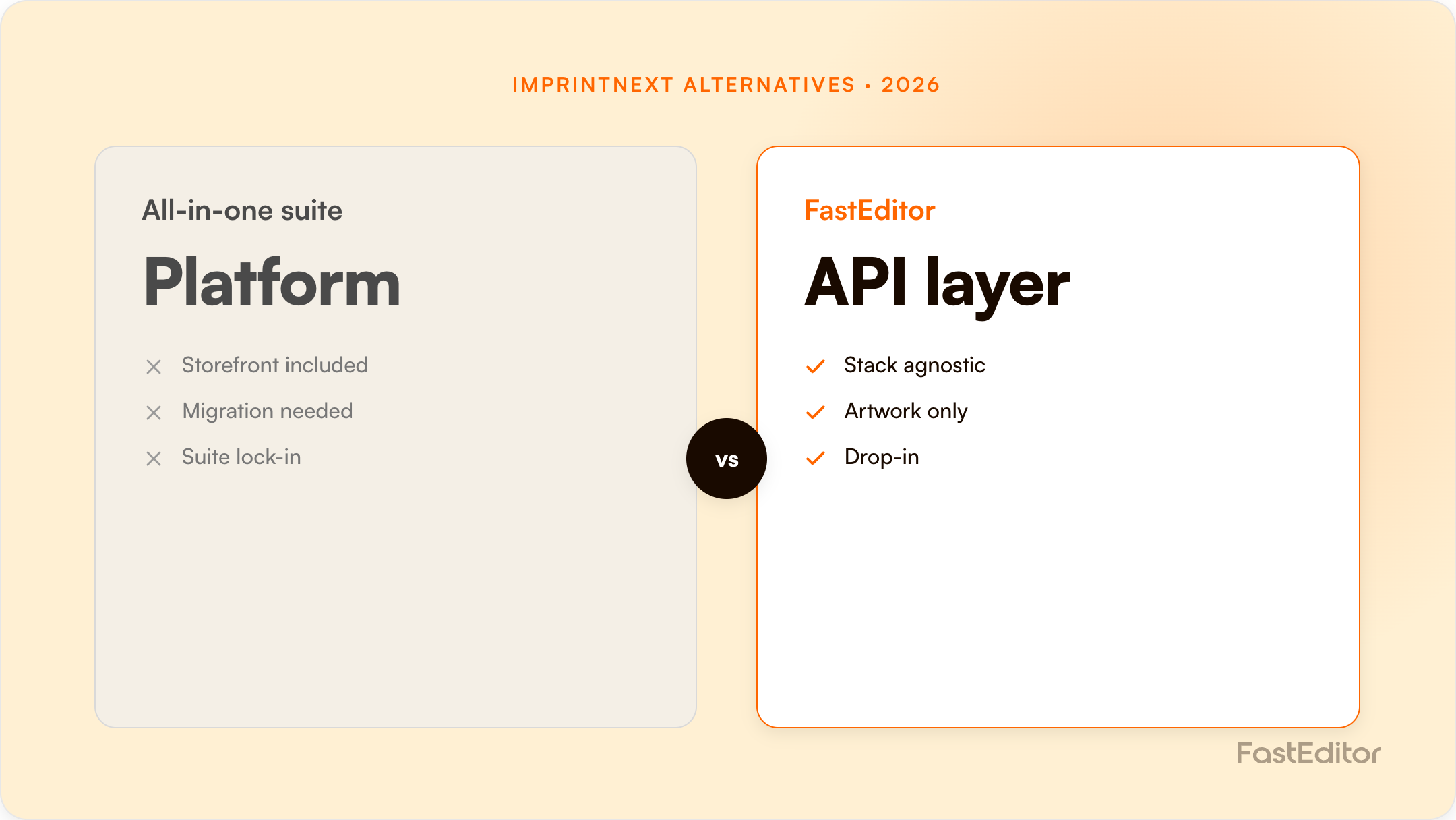
An honest ImprintNext alternative comparison: an all-in-one designer and print-shop business suite versus FastEditor's API-first artwork automation.
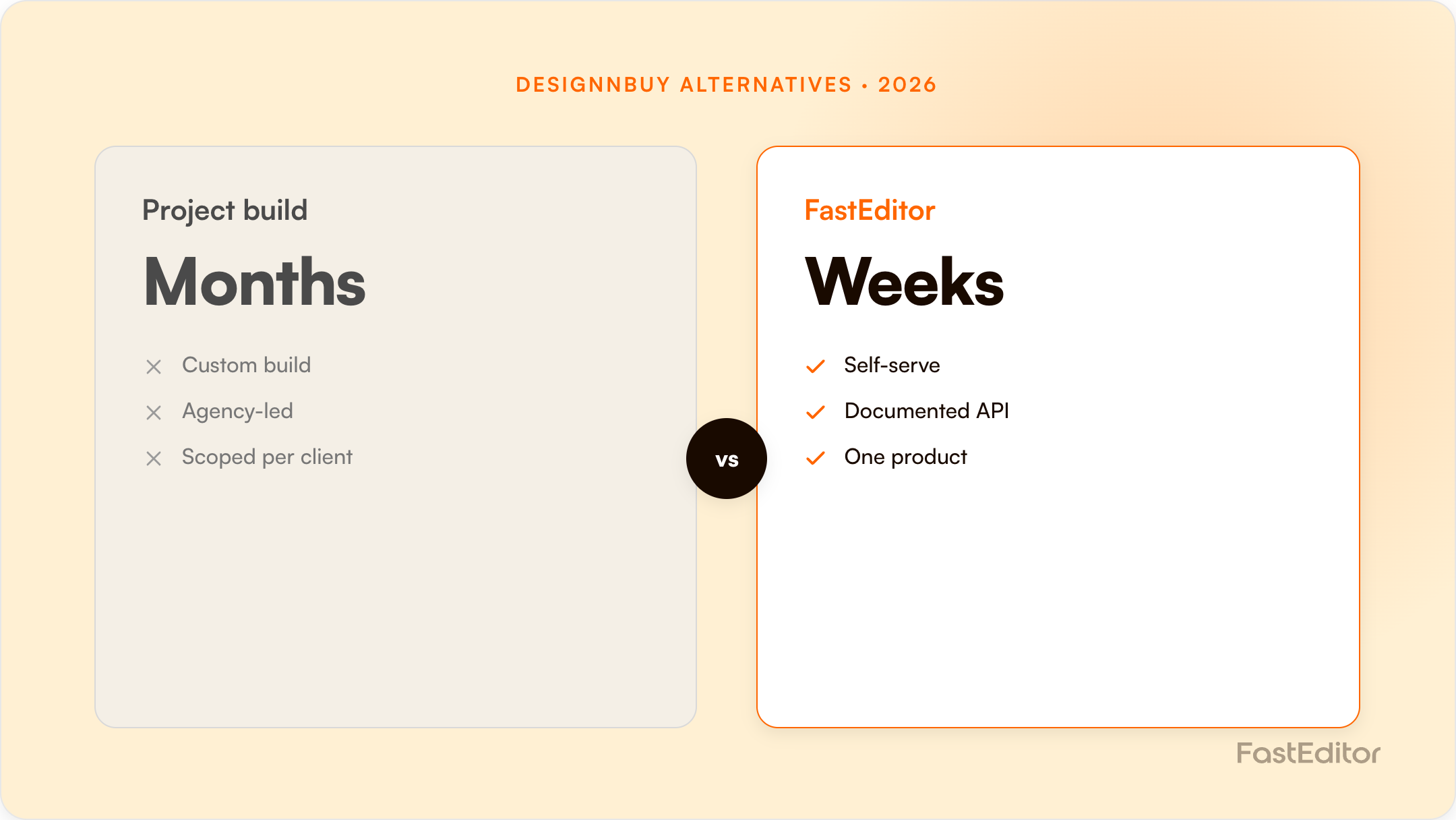
An honest Design'N'Buy / PrintXpand alternative comparison: full web-to-print suite versus an API-first artwork-automation layer that adds to your existing stack.
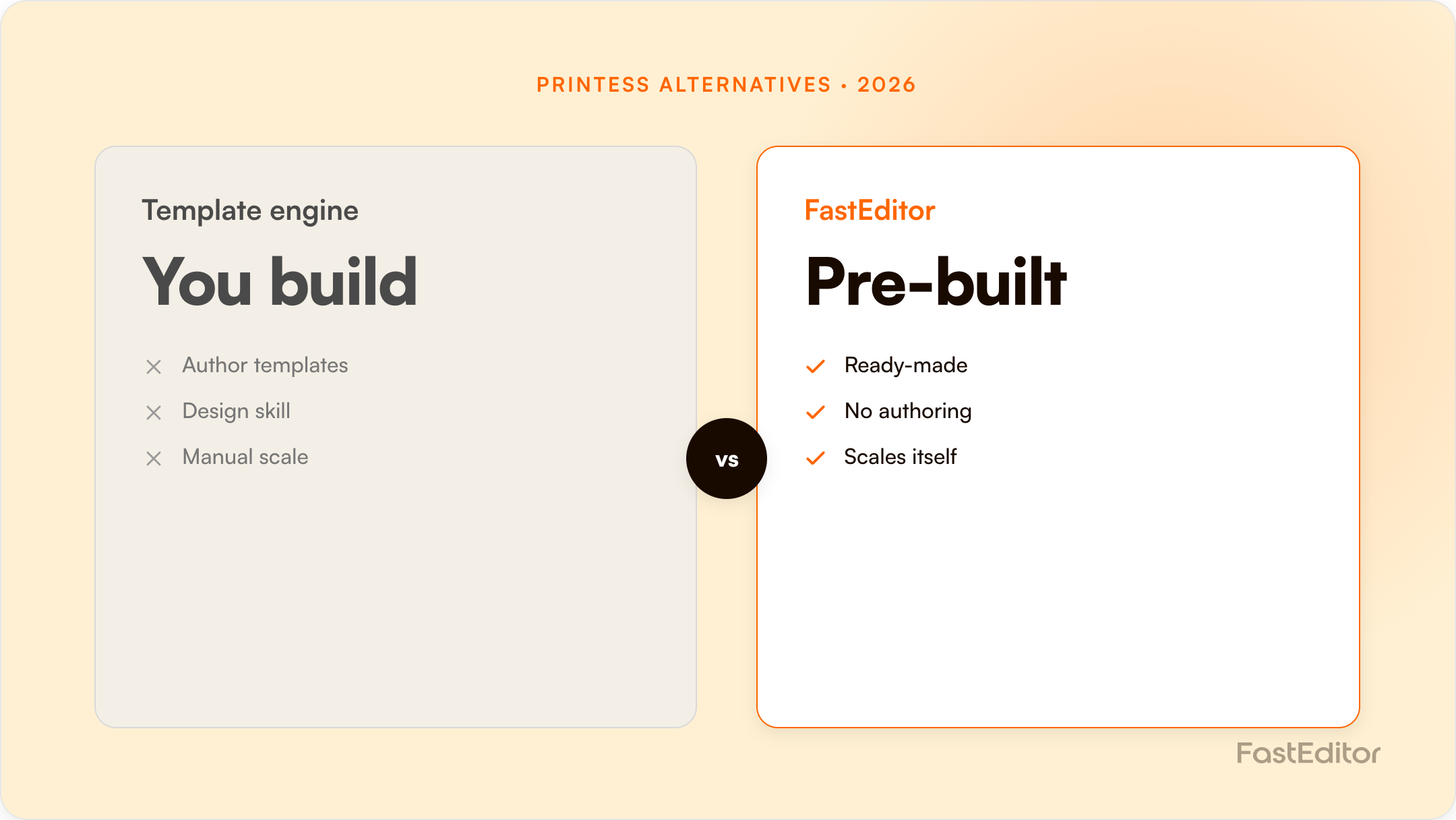
An honest Printess vs FastEditor comparison: both support production workflows, so compare template control, supplier coverage, validation and maintenance before switching.
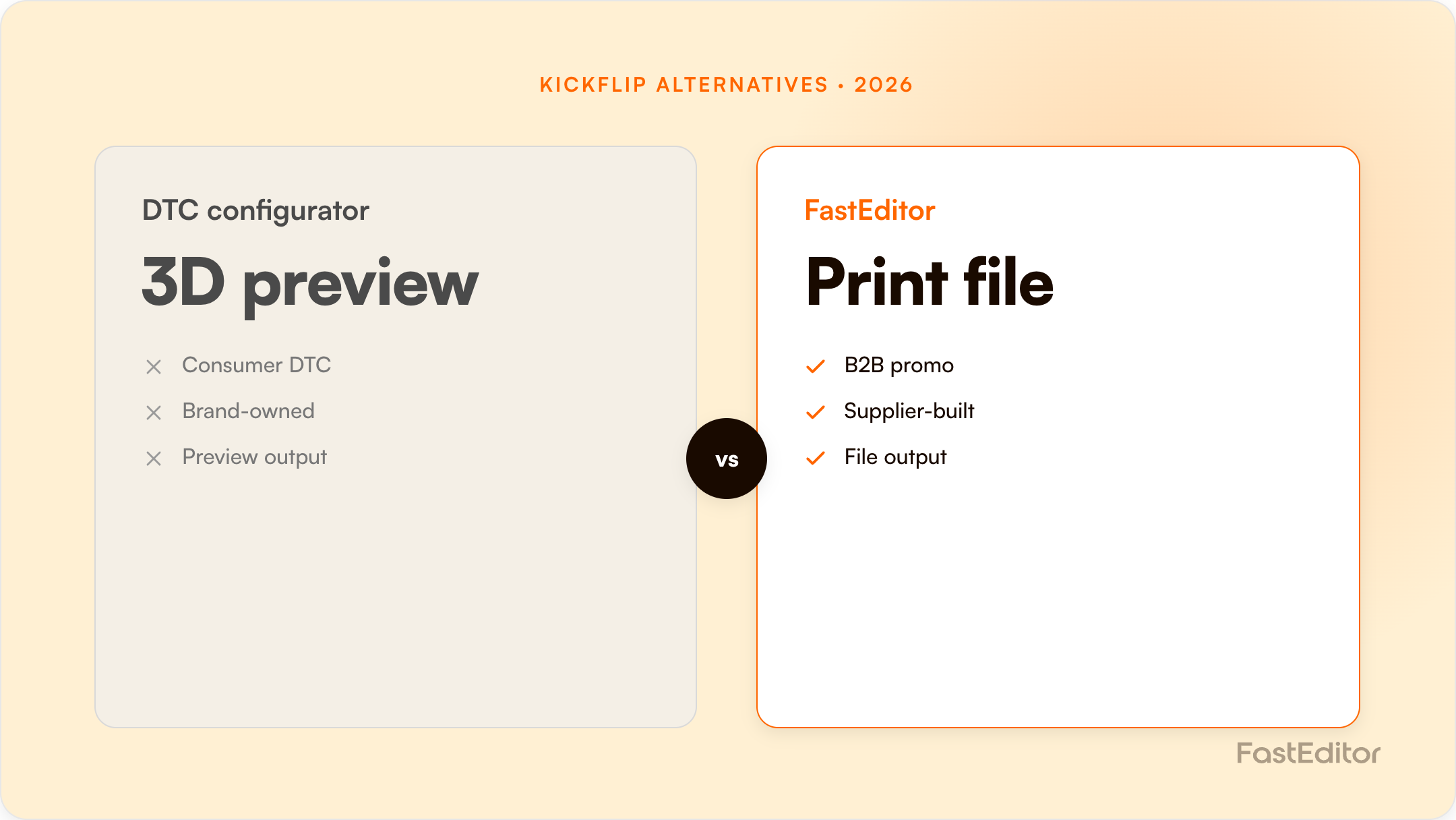
An honest Kickflip alternative comparison for teams that need more than a Shopify customizer: automated, production-ready file output across many suppliers.
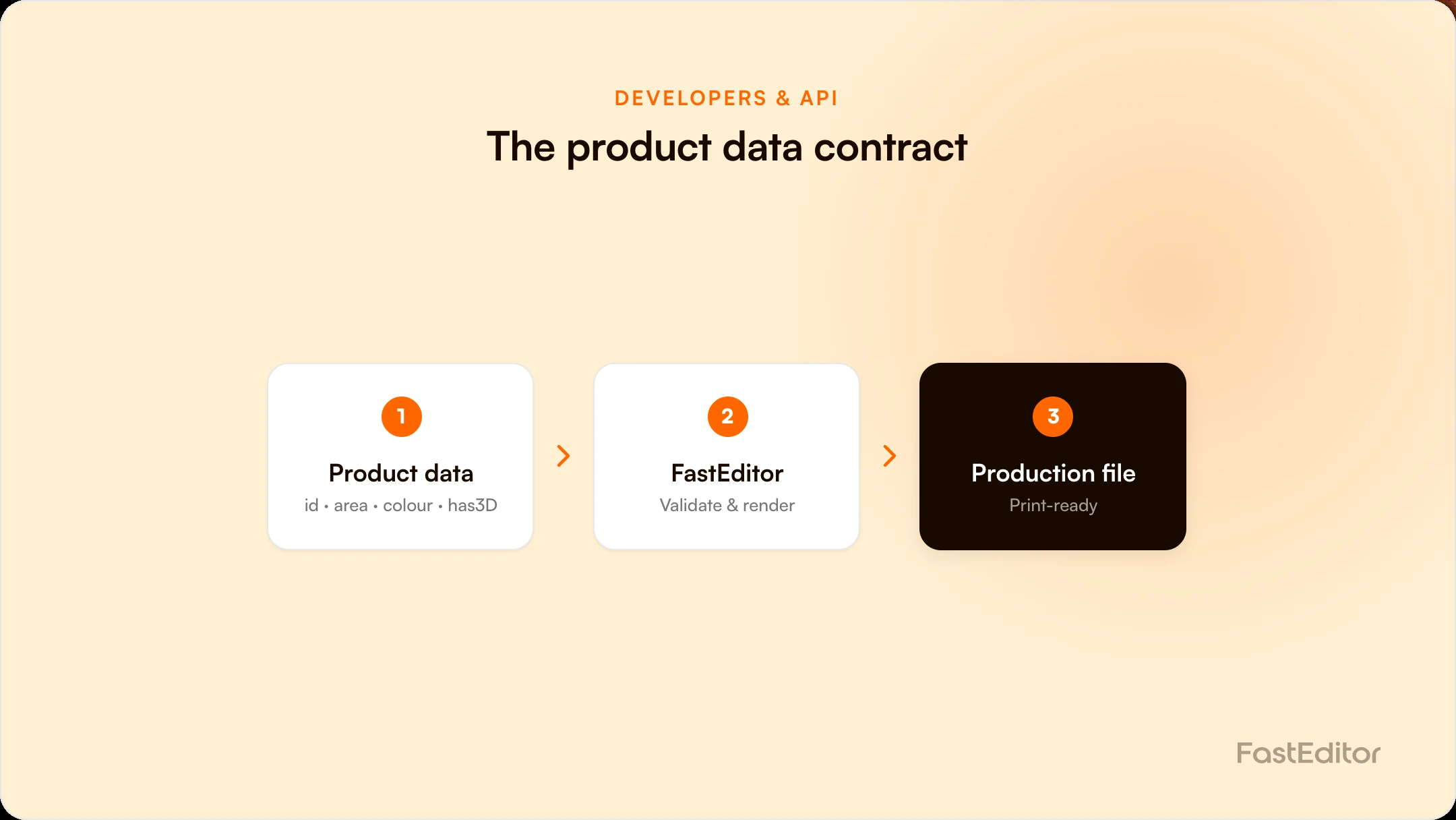
Most artwork-automation integrations stall on product data, not the API. Here are the fields that matter and the feed hygiene that keeps them working after go-live.
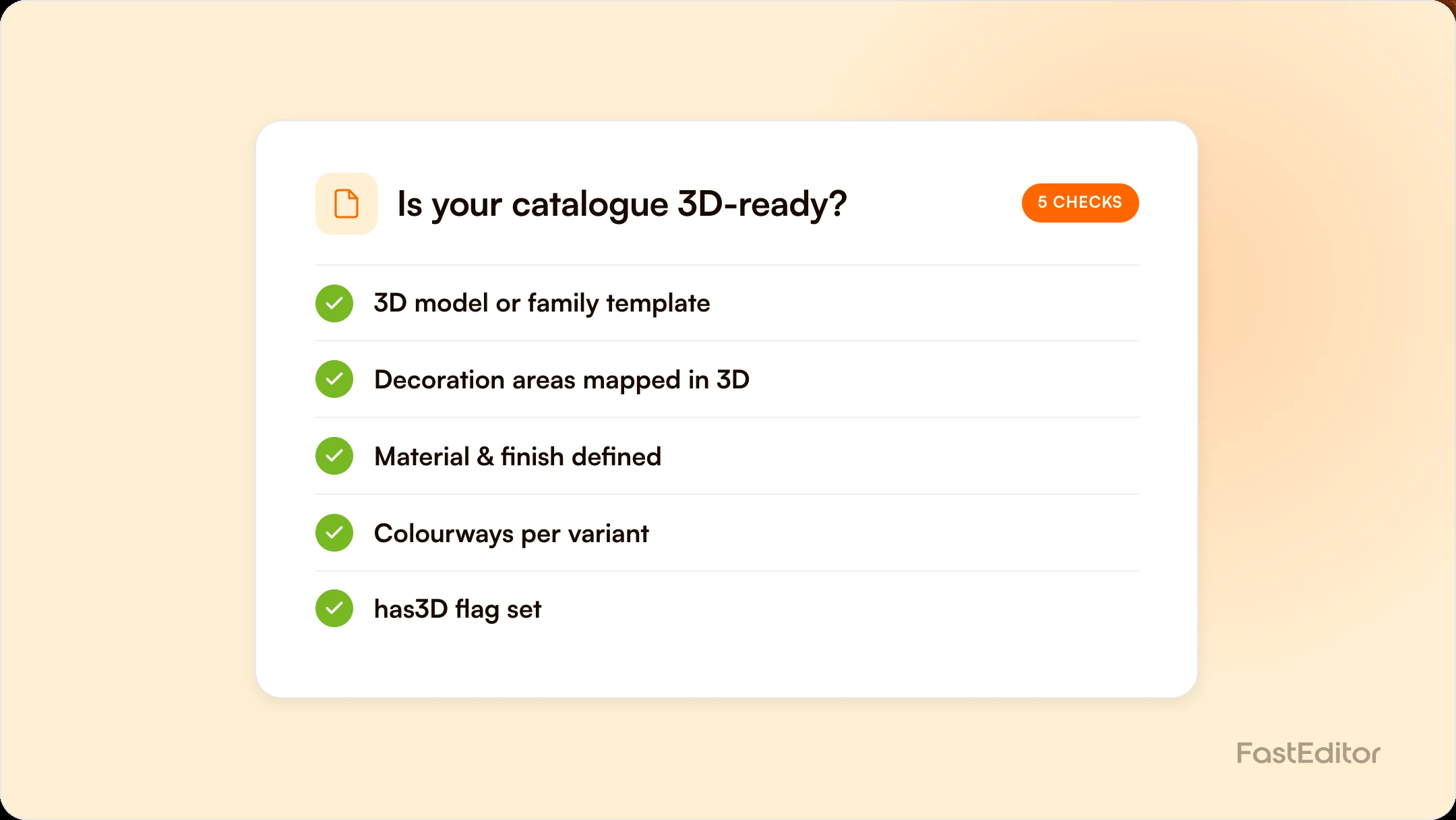
3D preview is less about clever graphics and more about clean product data. Here is exactly what makes a product 3D-ready, and how to get a whole catalogue there.
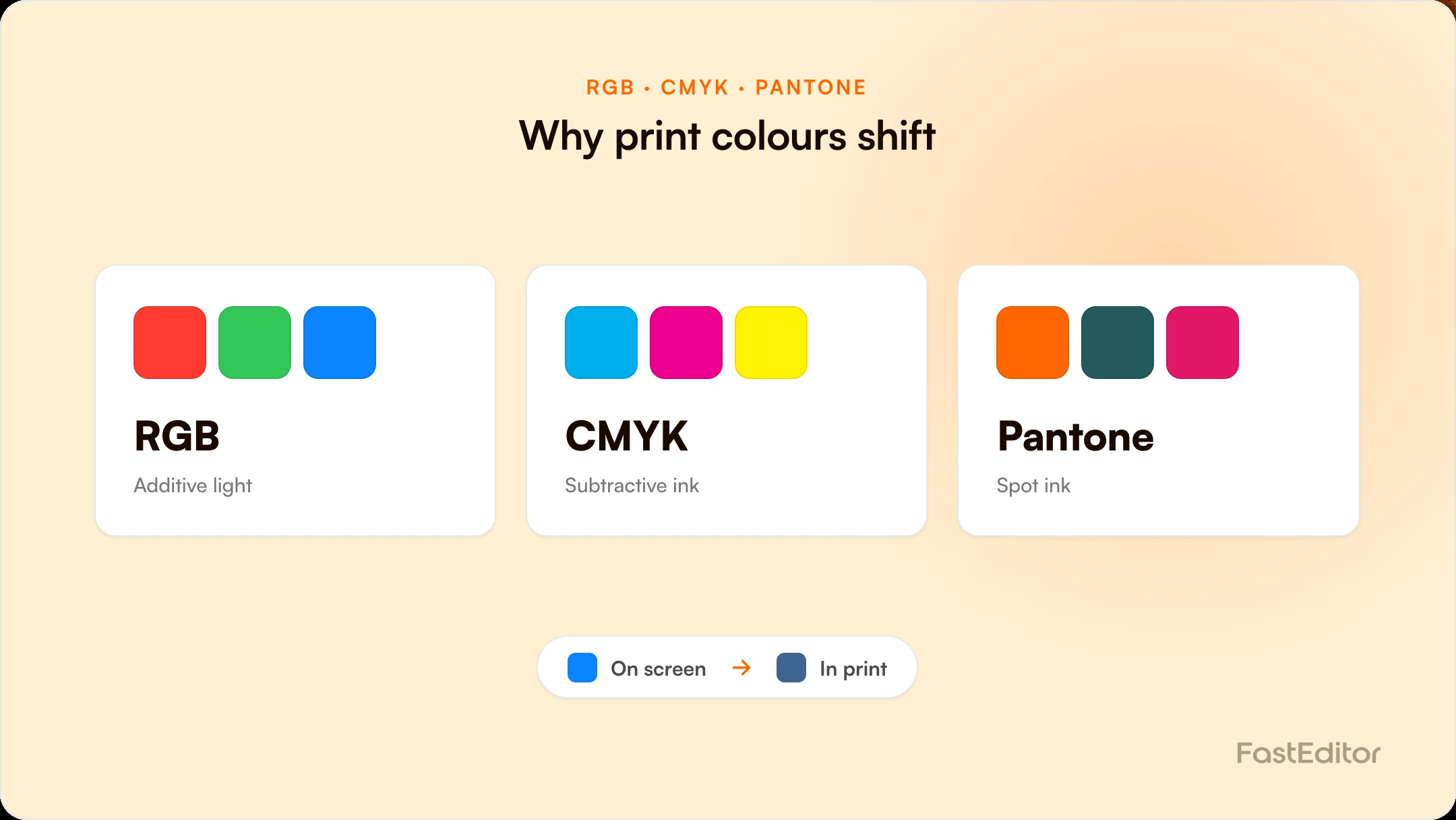
Colours drift between RGB, CMYK and Pantone because each describes colour differently. Here is which conversions are safe to automate, which to avoid, and how to stop reprints.
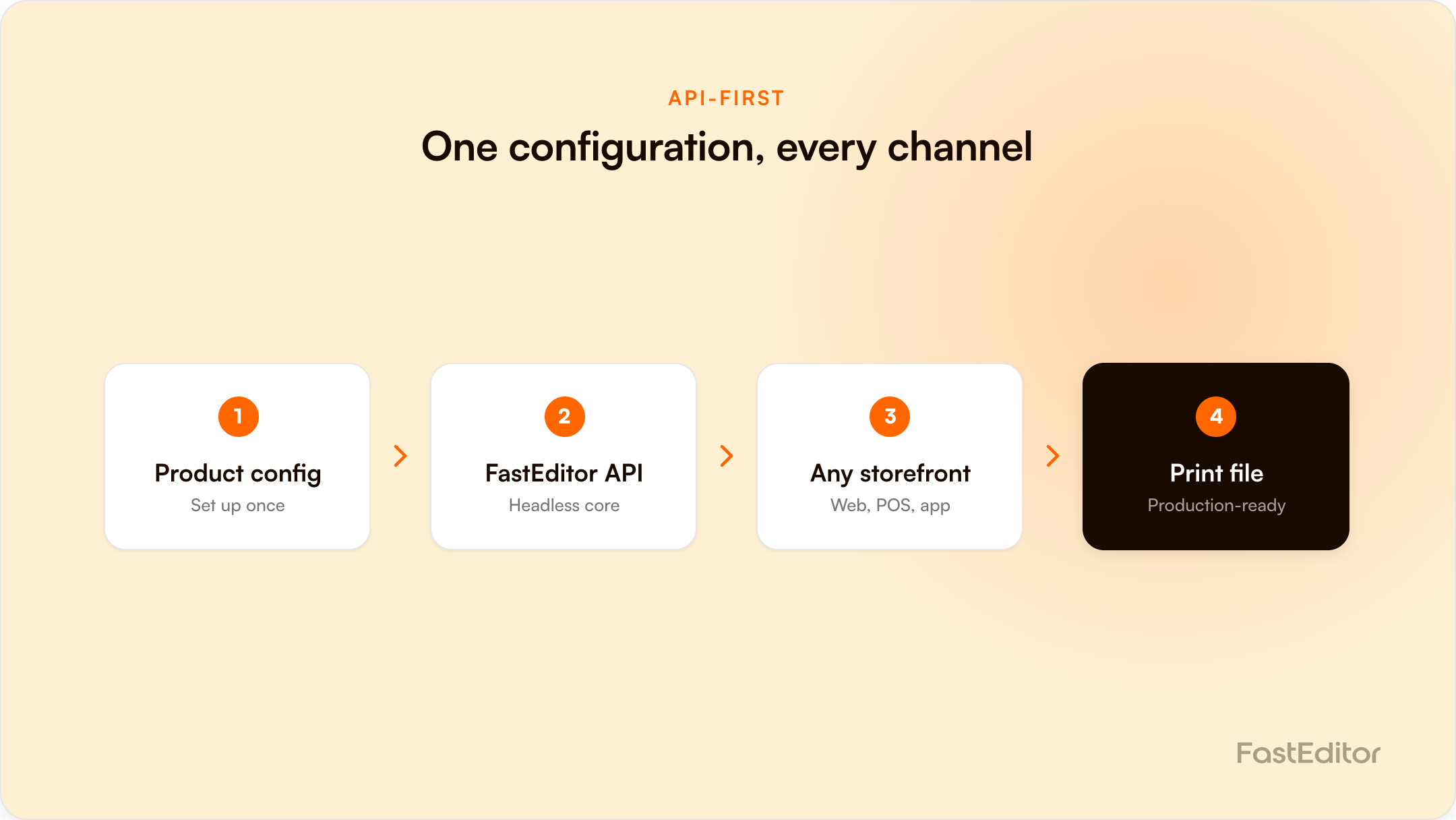
API-first gets used as a buzzword by most configurator vendors. For a product personalization editor specifically, it has one concrete meaning worth testing for.
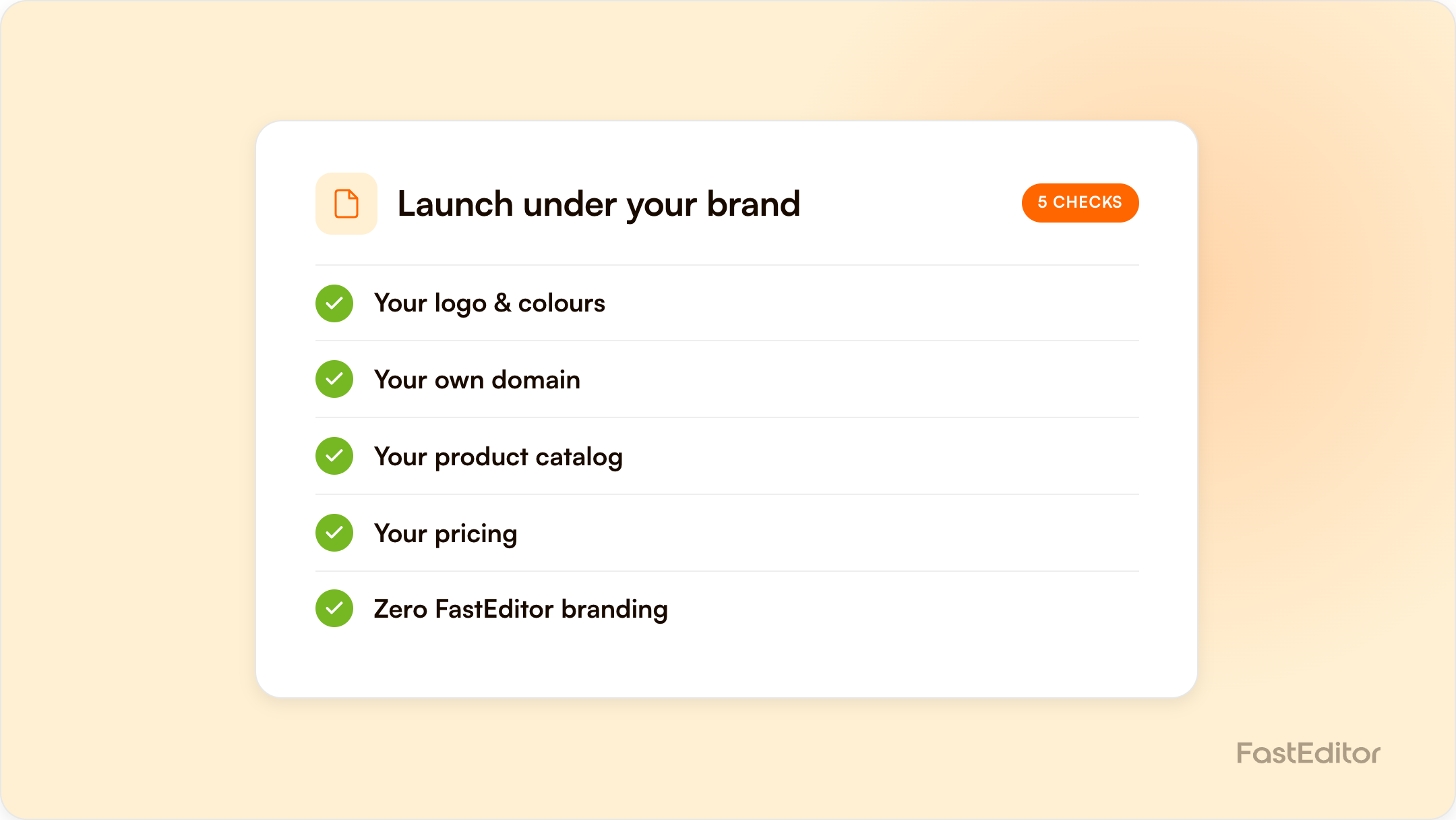
Can we put this under our own brand? is one of the first questions any reseller or distributor asks a personalization vendor. Here is the real checklist behind that question.
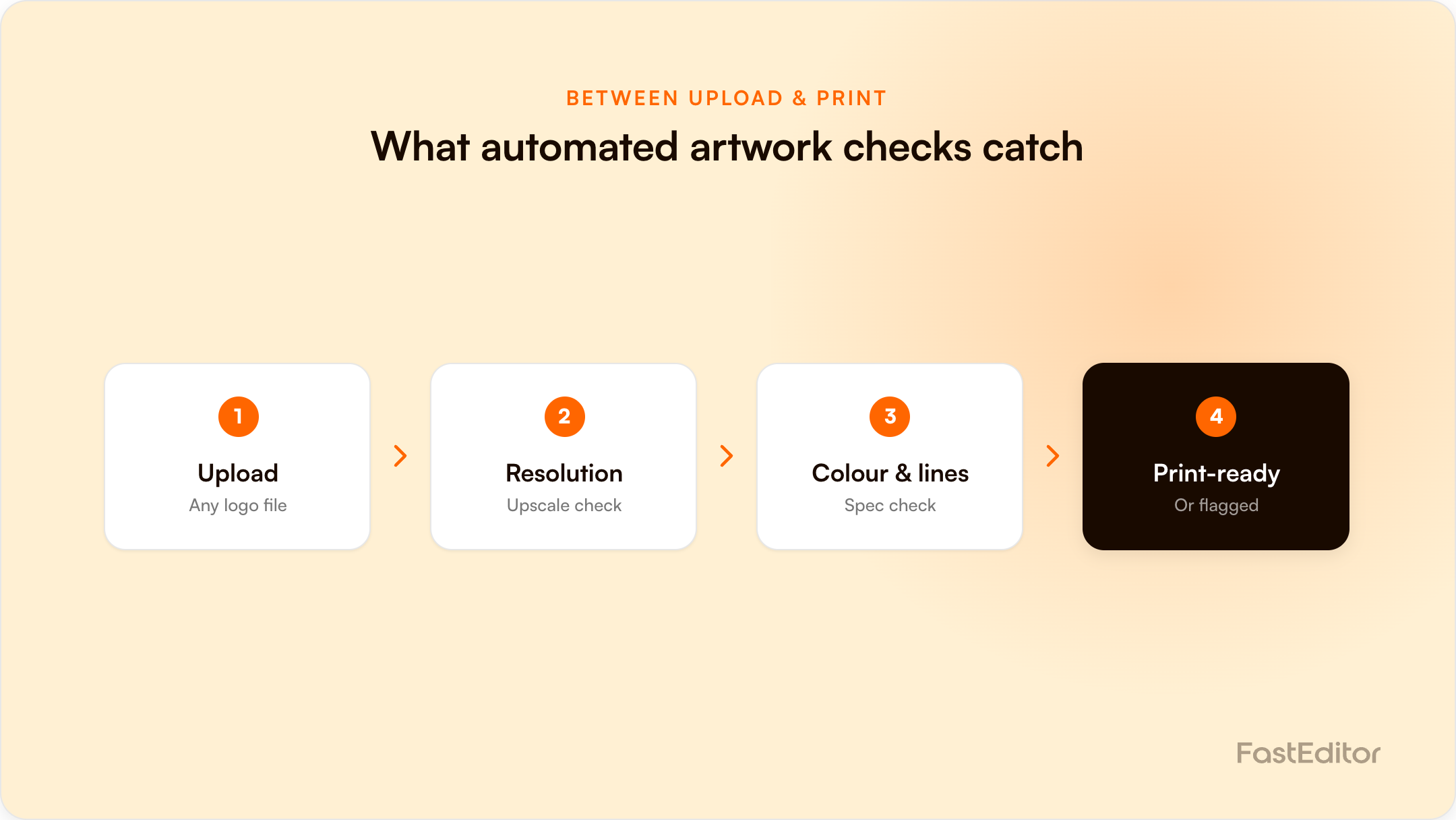
Most of what makes a logo unprintable never reaches a human reviewer. Here is what automated artwork checks actually look for, and what happens when a platform skips them.
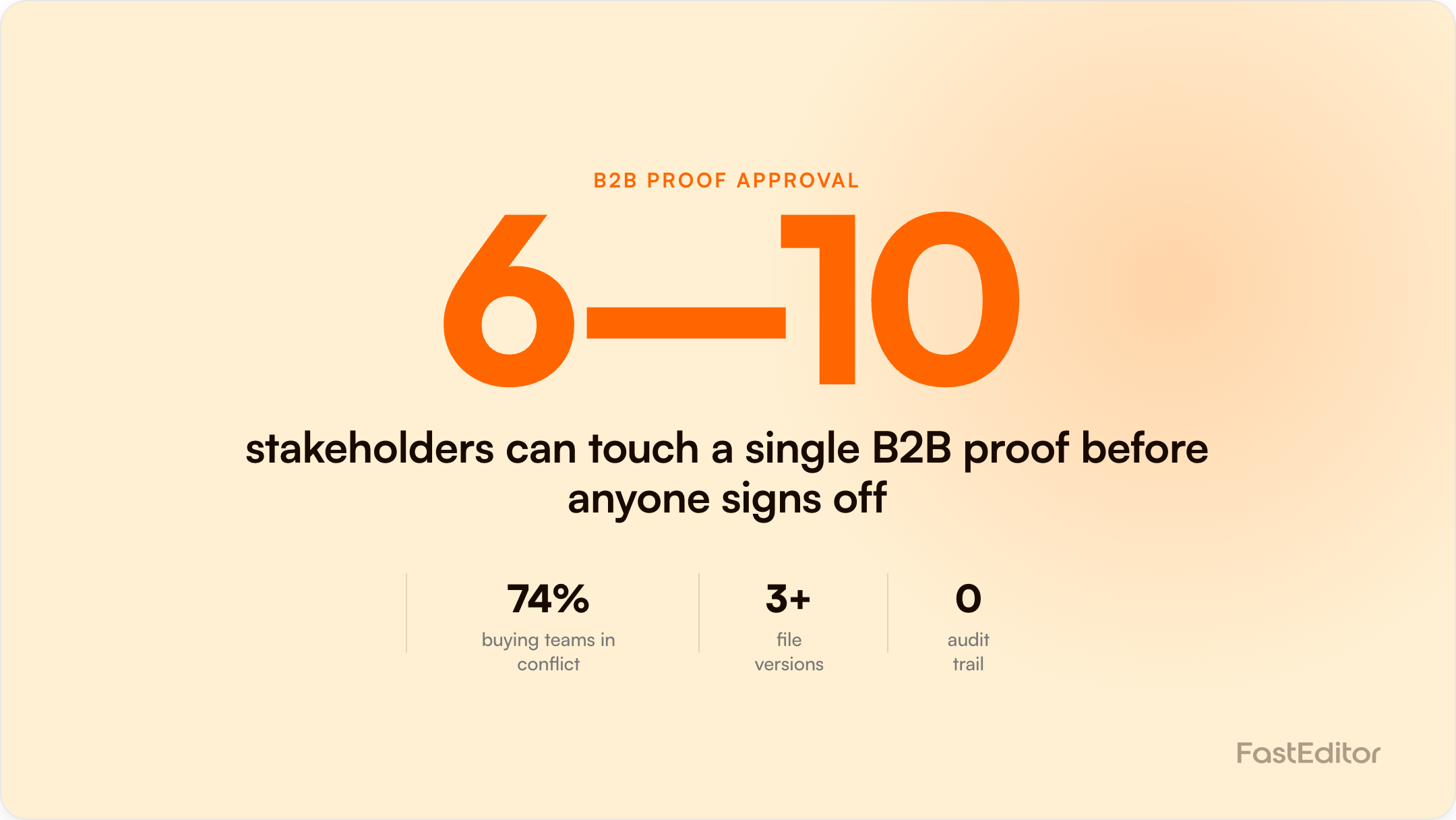
A single proof sent by email can pick up five approvers, three file versions, and zero audit trail before anyone actually signs off. Here is why e-proof approval breaks down for B2B orders, and how to fix it.
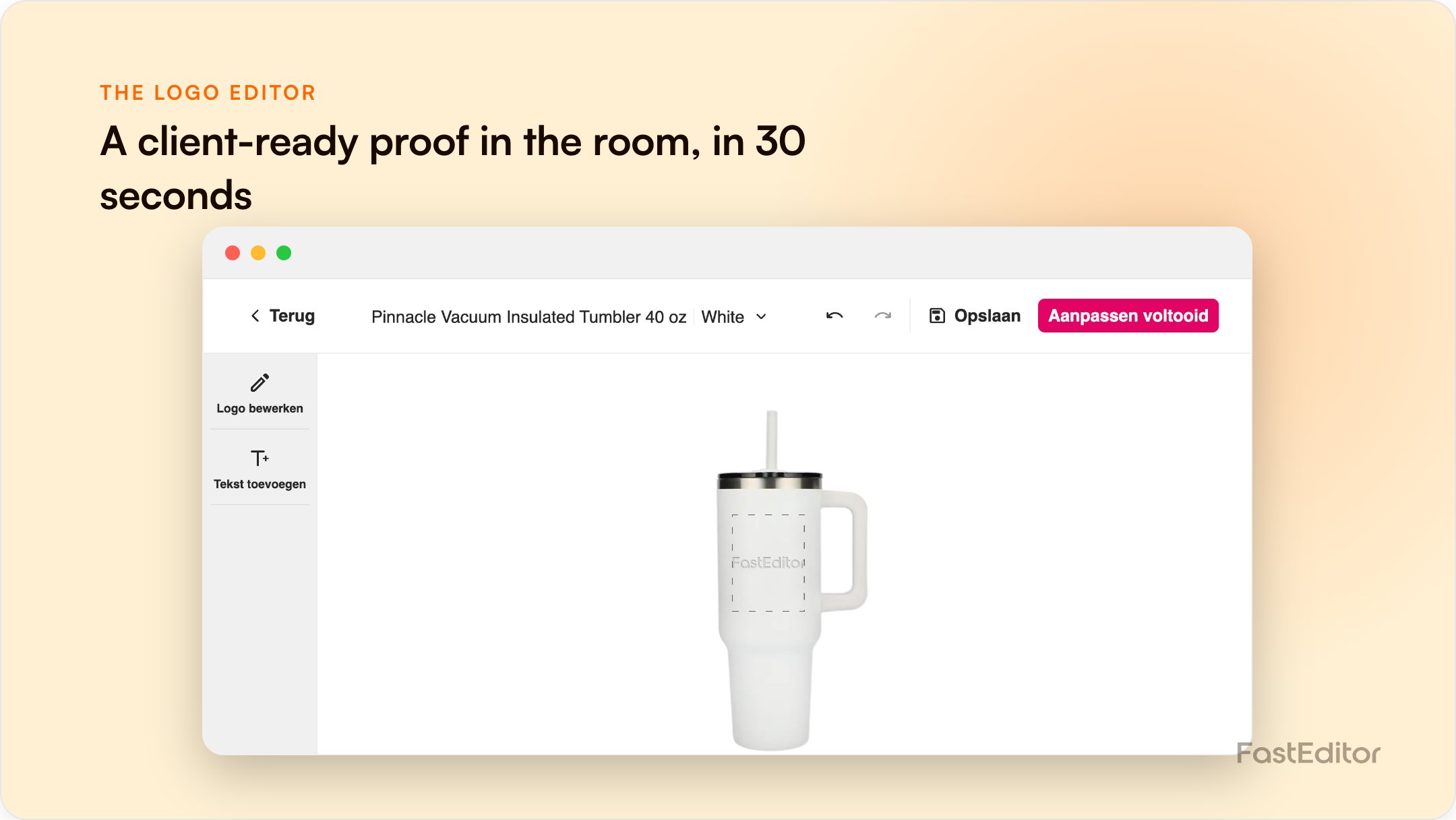
A logo editor is not only a webshop widget. Put it in front of a buyer in a meeting or at a trade show, and it becomes one of the fastest ways your sales team has to close a deal.
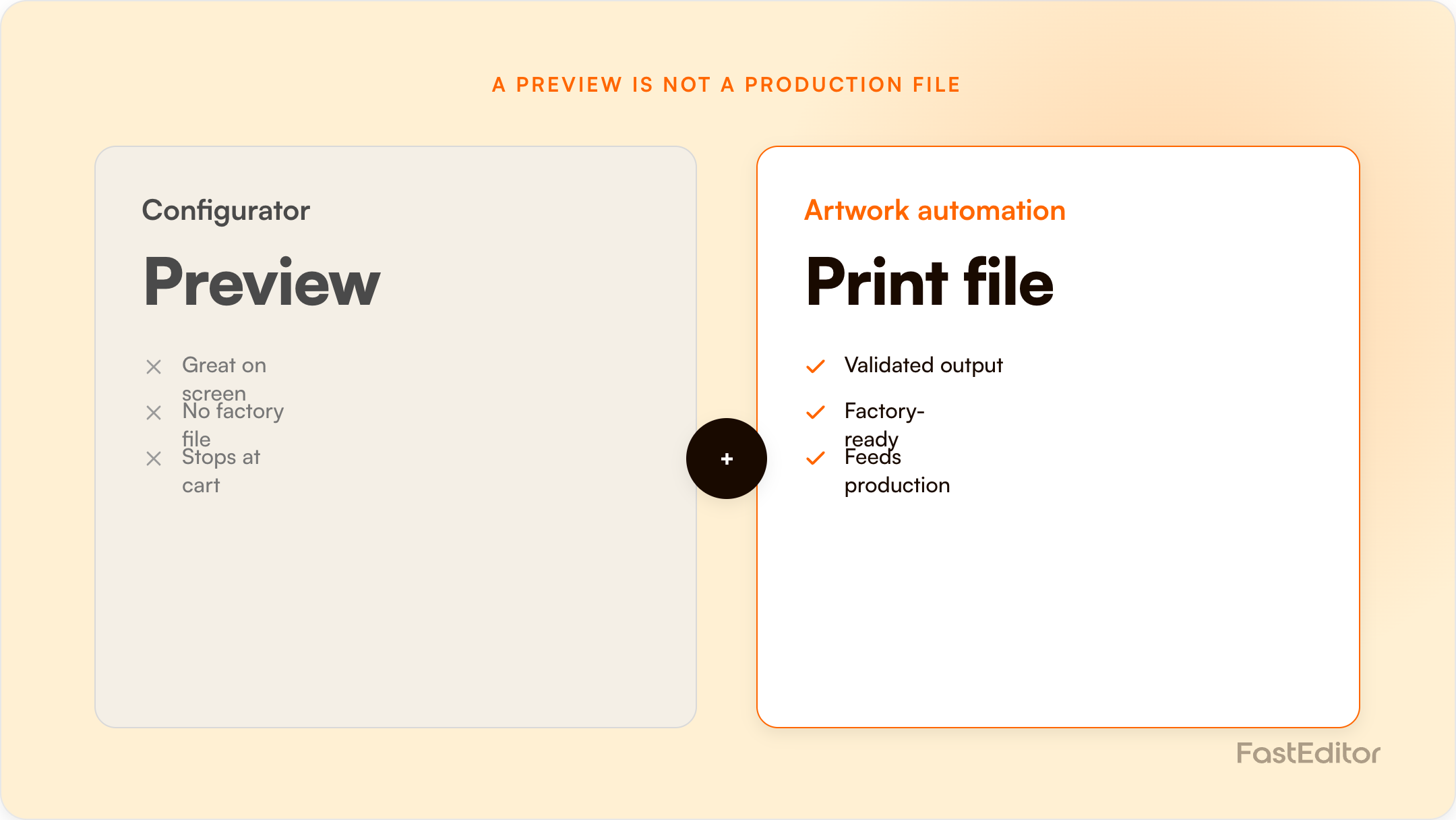
A product configurator shows your customer a beautiful preview. It does not, on its own, produce a file your factory can use. Here is the difference, and why promo orders need both layers.
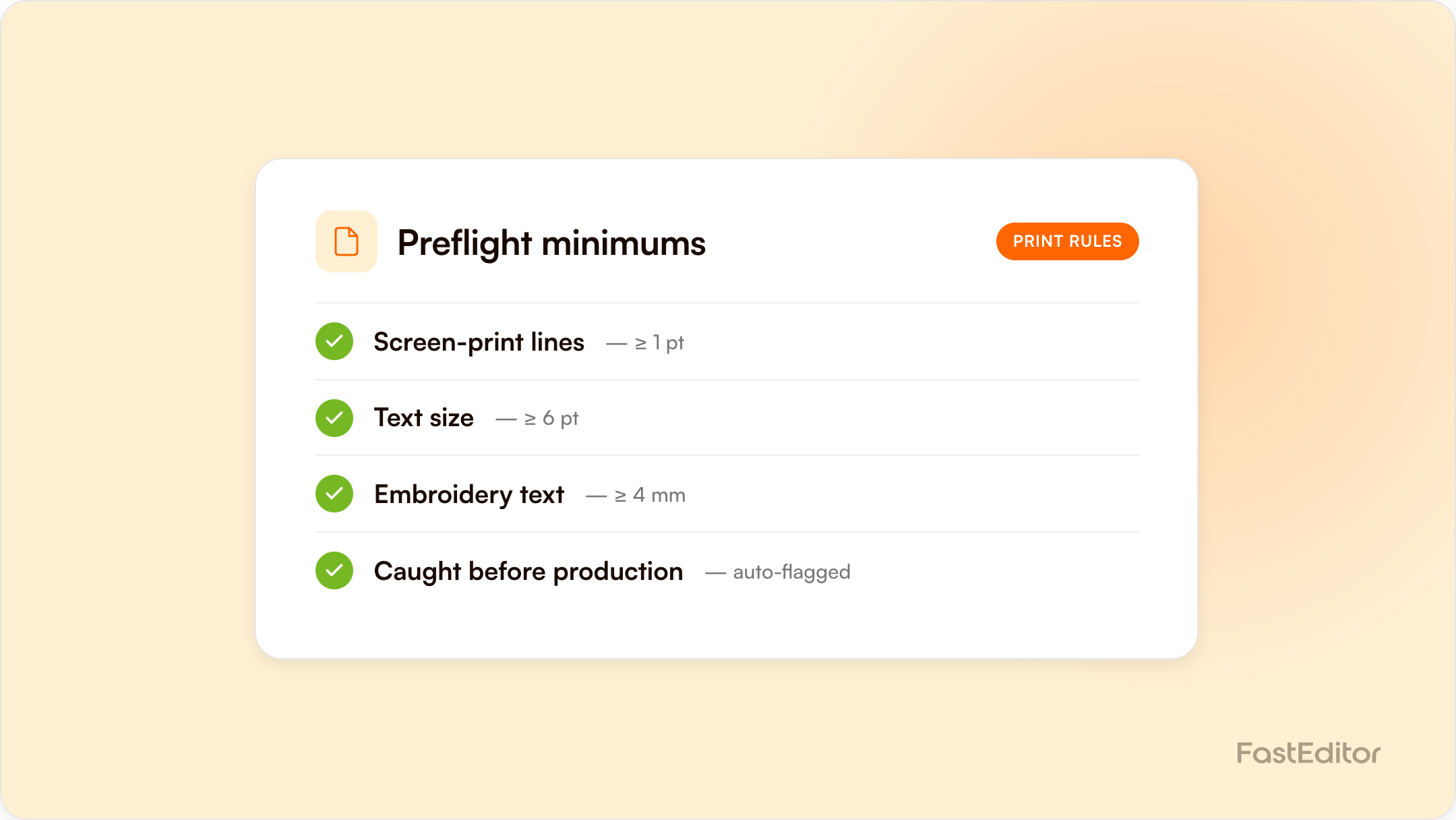
Thin lines and tiny type are a top cause of rejected proofs and reprints. Here are the working minimums by decoration method, and how to catch violations before production.
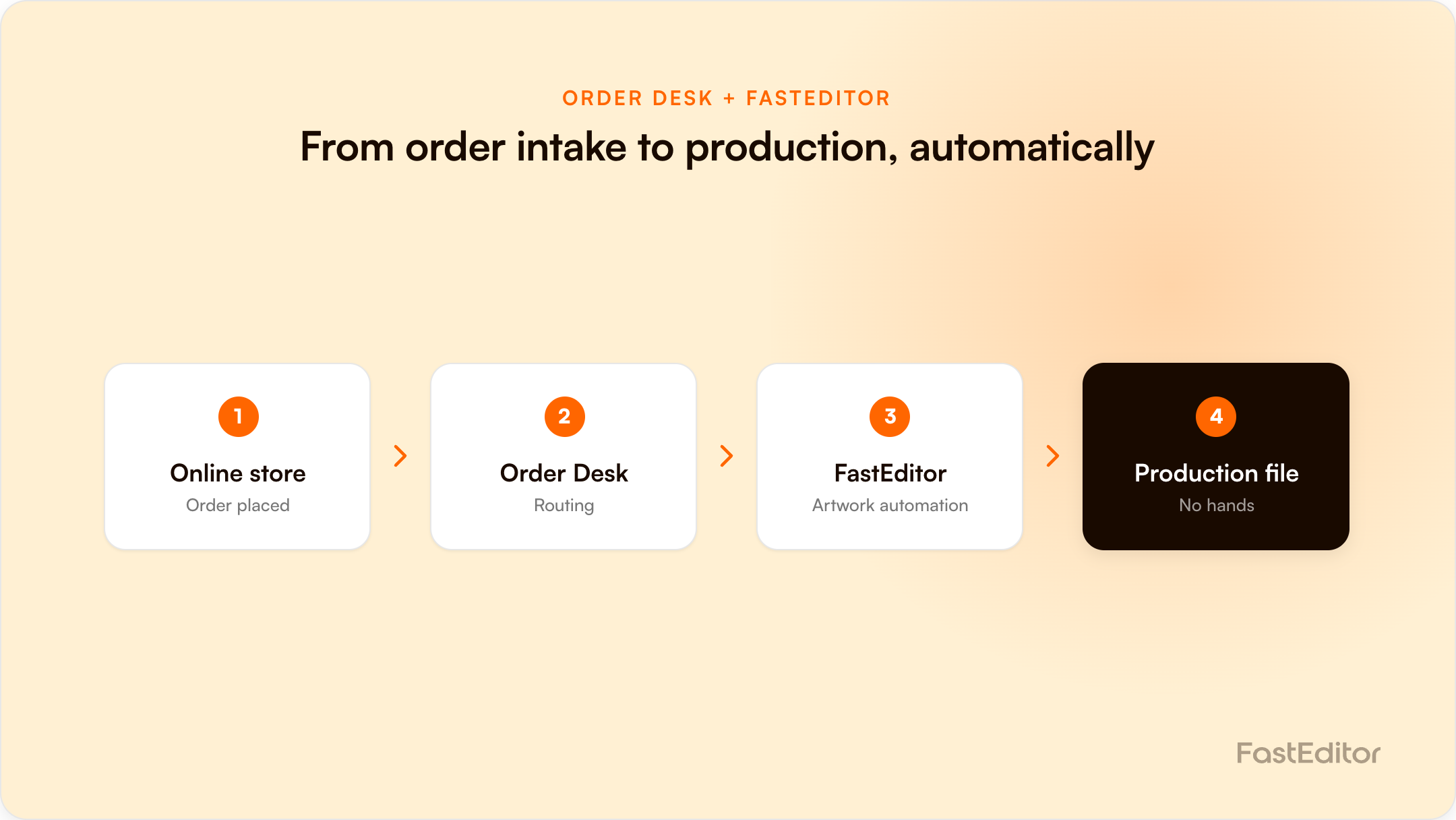
Most merch operations have automated order routing and shipping, yet still prepare artwork by hand. Here is how connecting Order Desk and FastEditor removes that bottleneck.
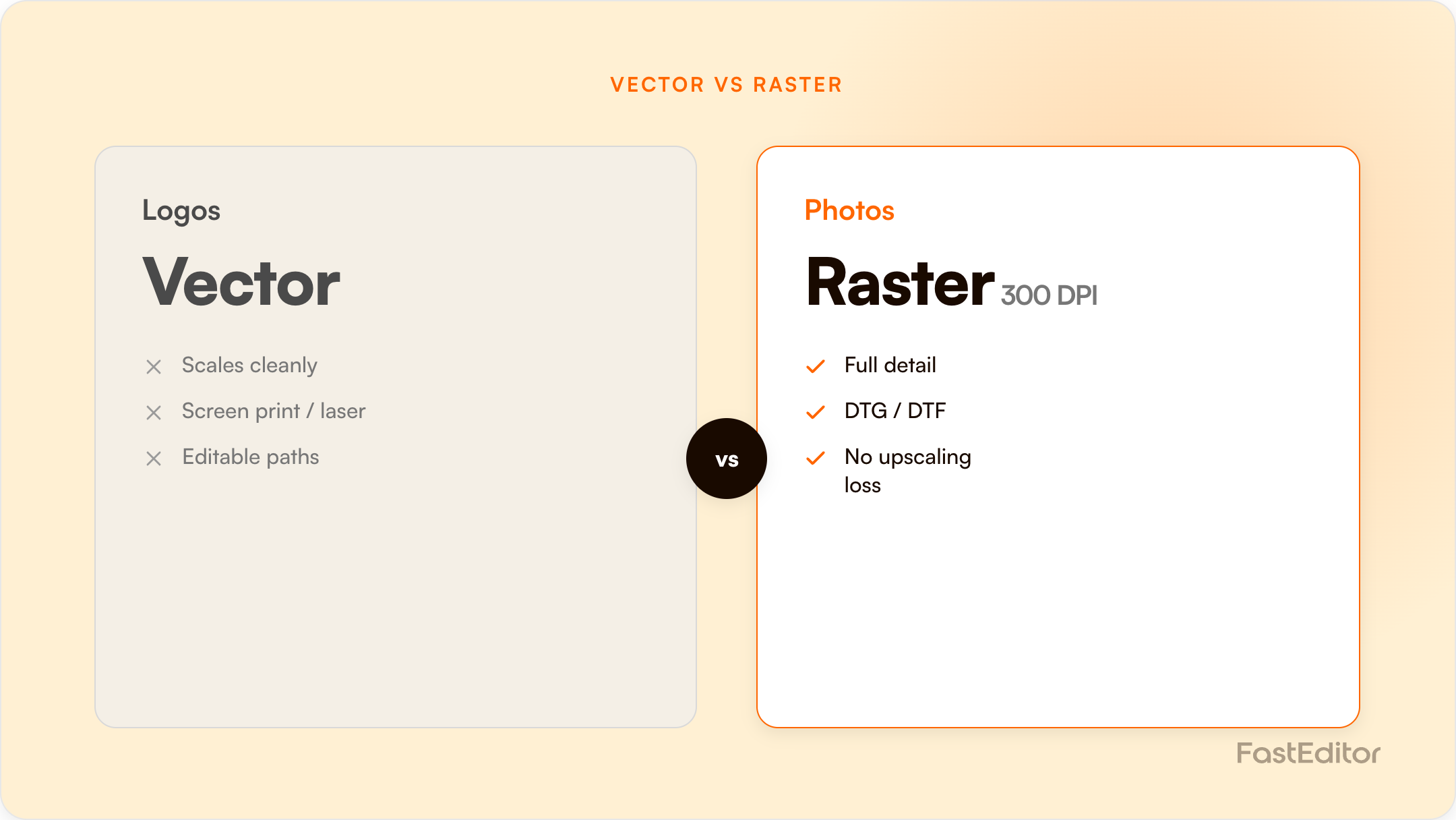
A clear, no-jargon guide to the right artwork file for screen print, DTG, DTF, embroidery and laser, why vector beats raster for logos, and what to do when the customer only has a PNG.
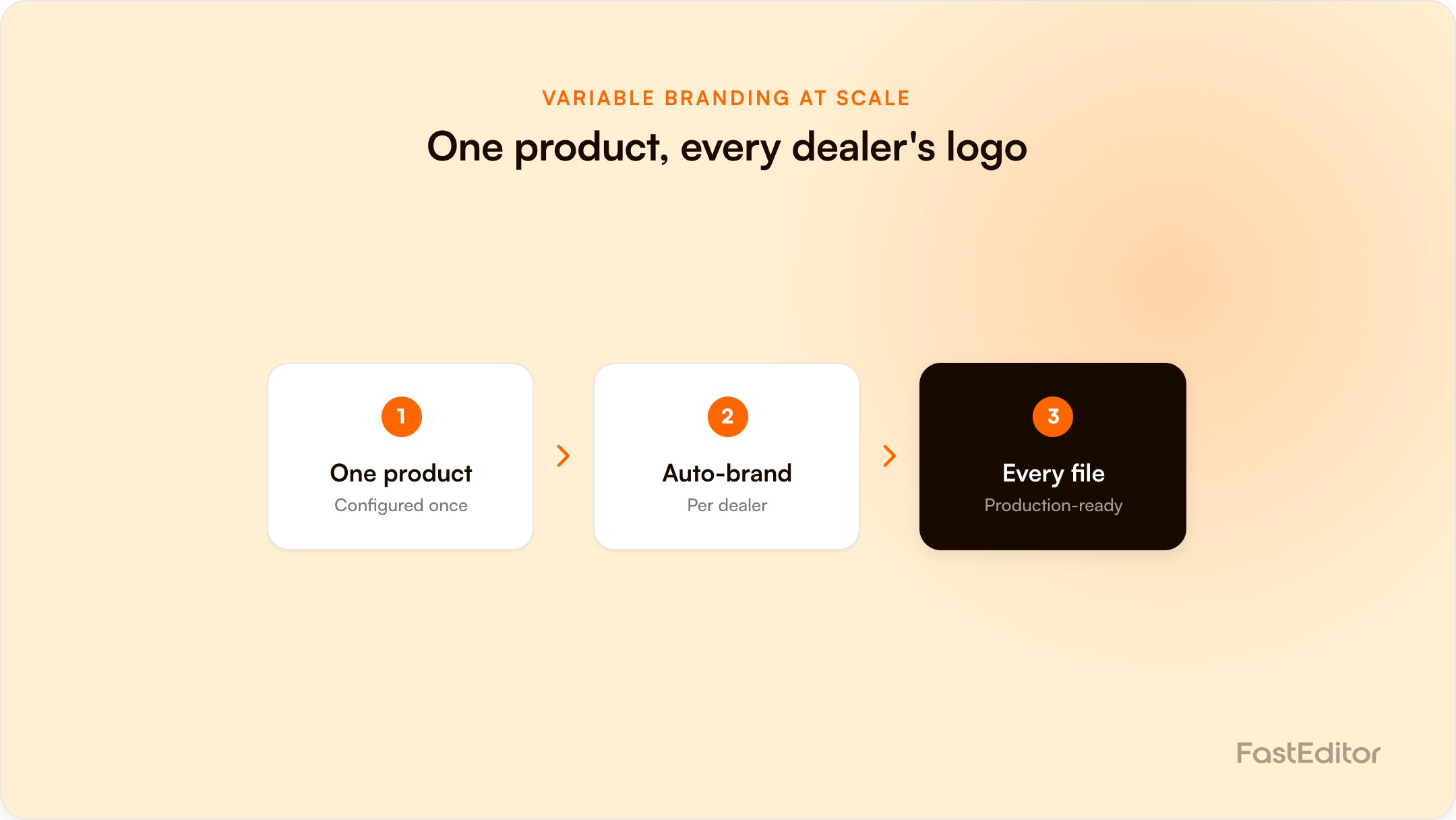
A distributor sells the same jacket to 200 dealers, each wanting their own logo on it. Done by hand that is 200 artwork jobs. Here is how to brand one product for every partner, automatically.
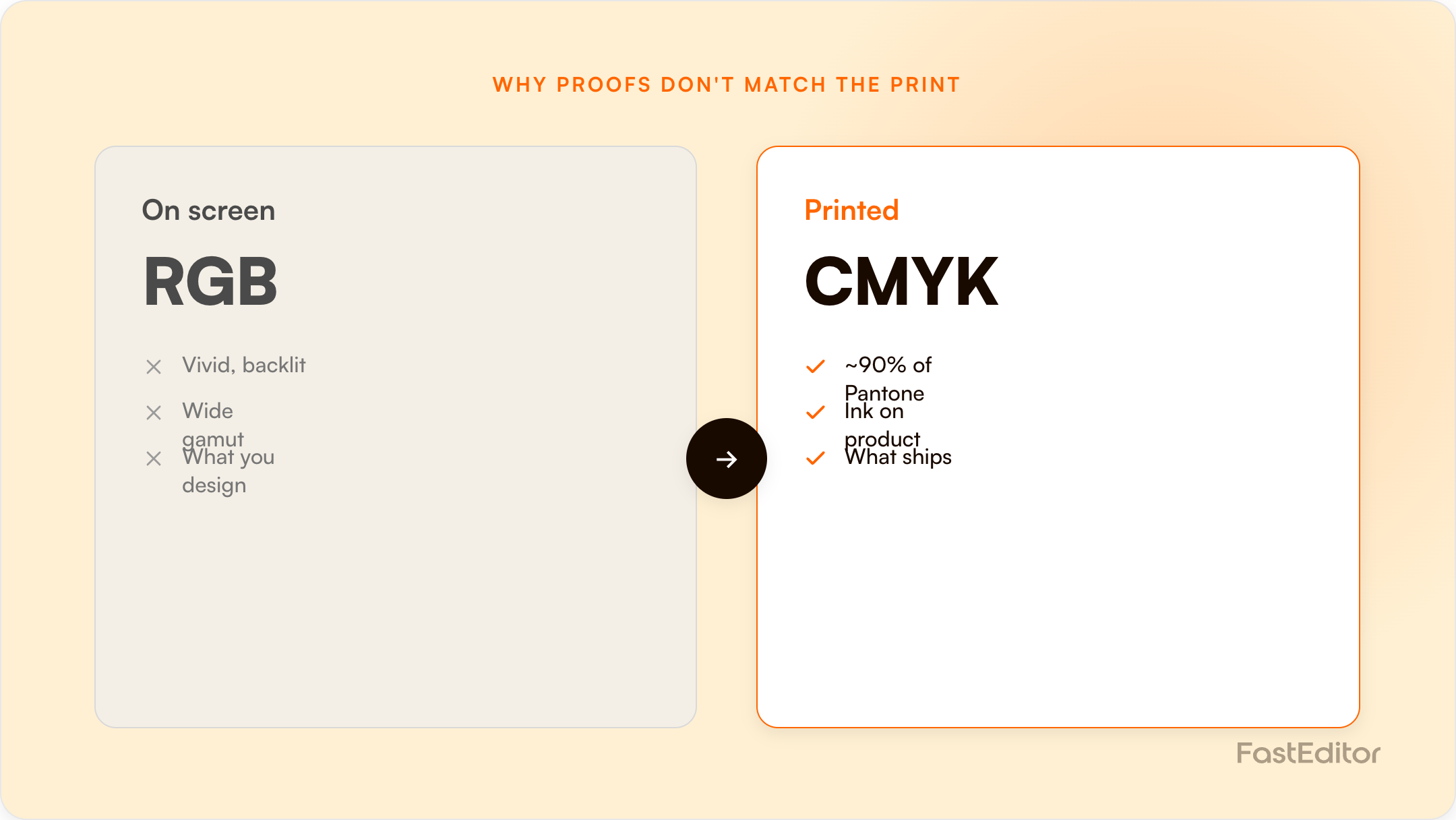
Your logo looks perfect on screen, then the printed product comes back a shade off or a few millimetres out of place. Here is why on-screen proofs and final prints disagree, and how to make them match.
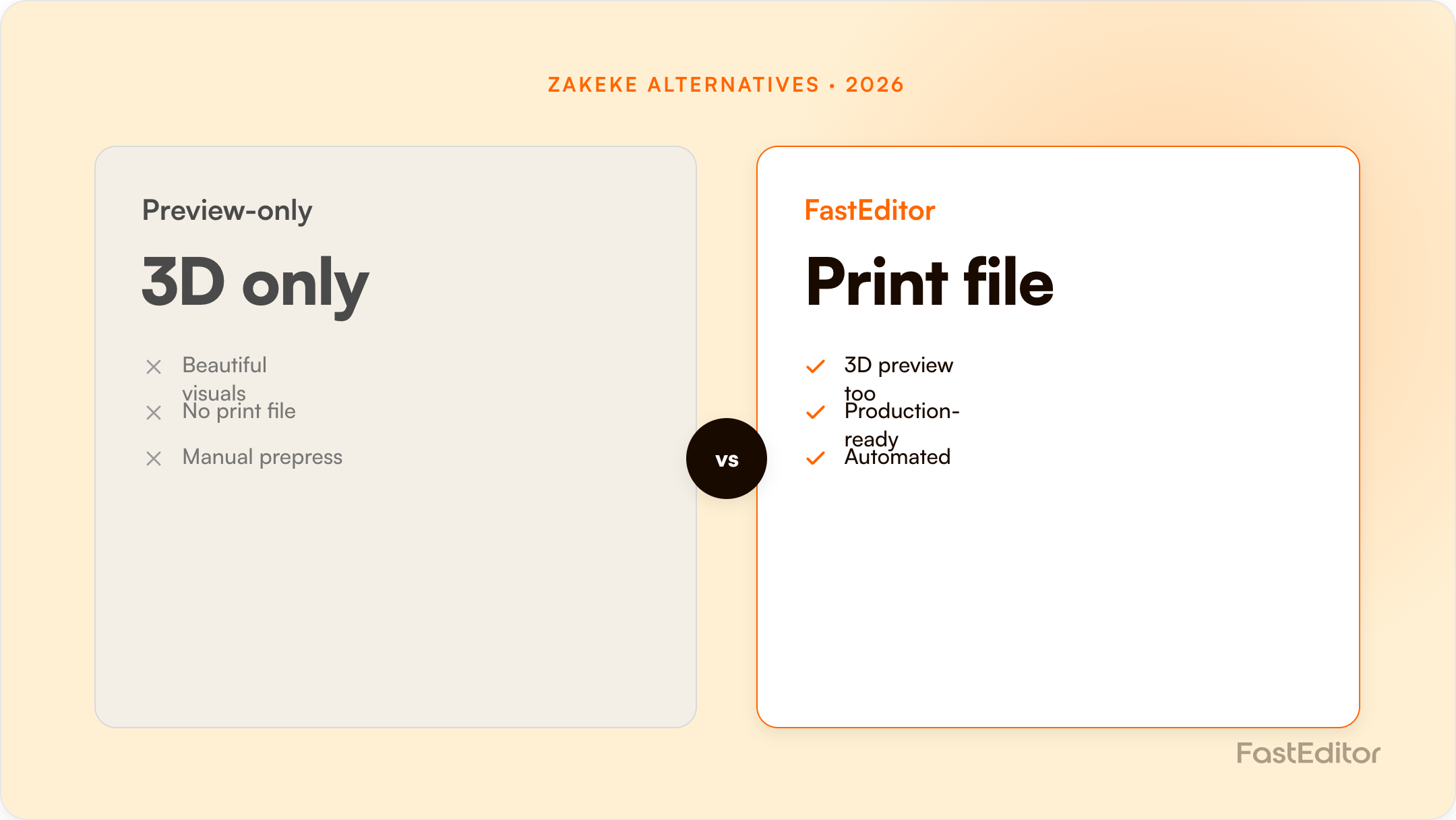
An honest comparison of Zakeke and FastEditor for resellers and suppliers: both generate production files, so compare the supplier-specific workflow, validation and setup before you switch.
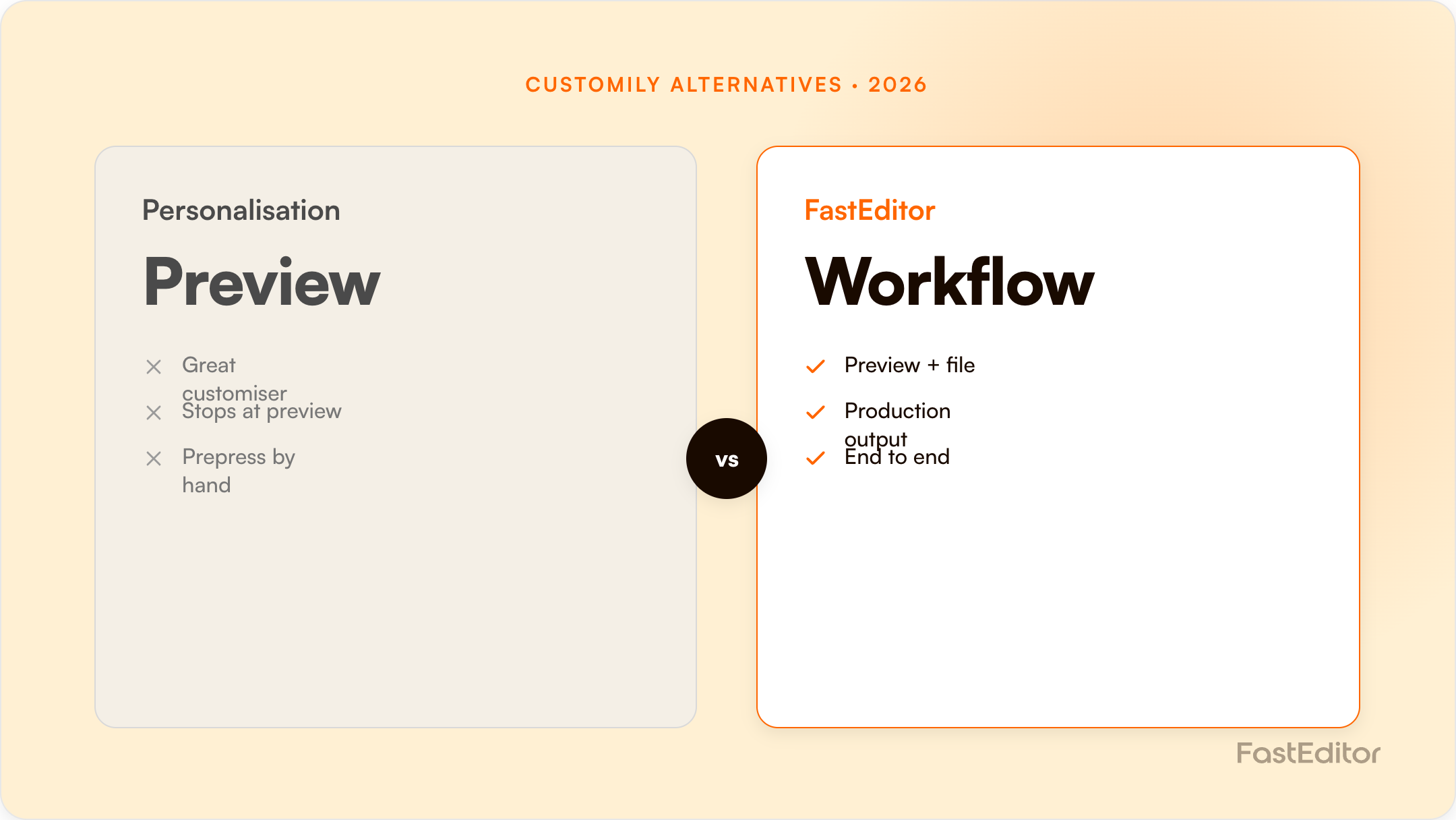
An honest comparison of Customily and FastEditor: both generate production files for POD and promo, so compare supplier specs, validation, formats and setup before switching.
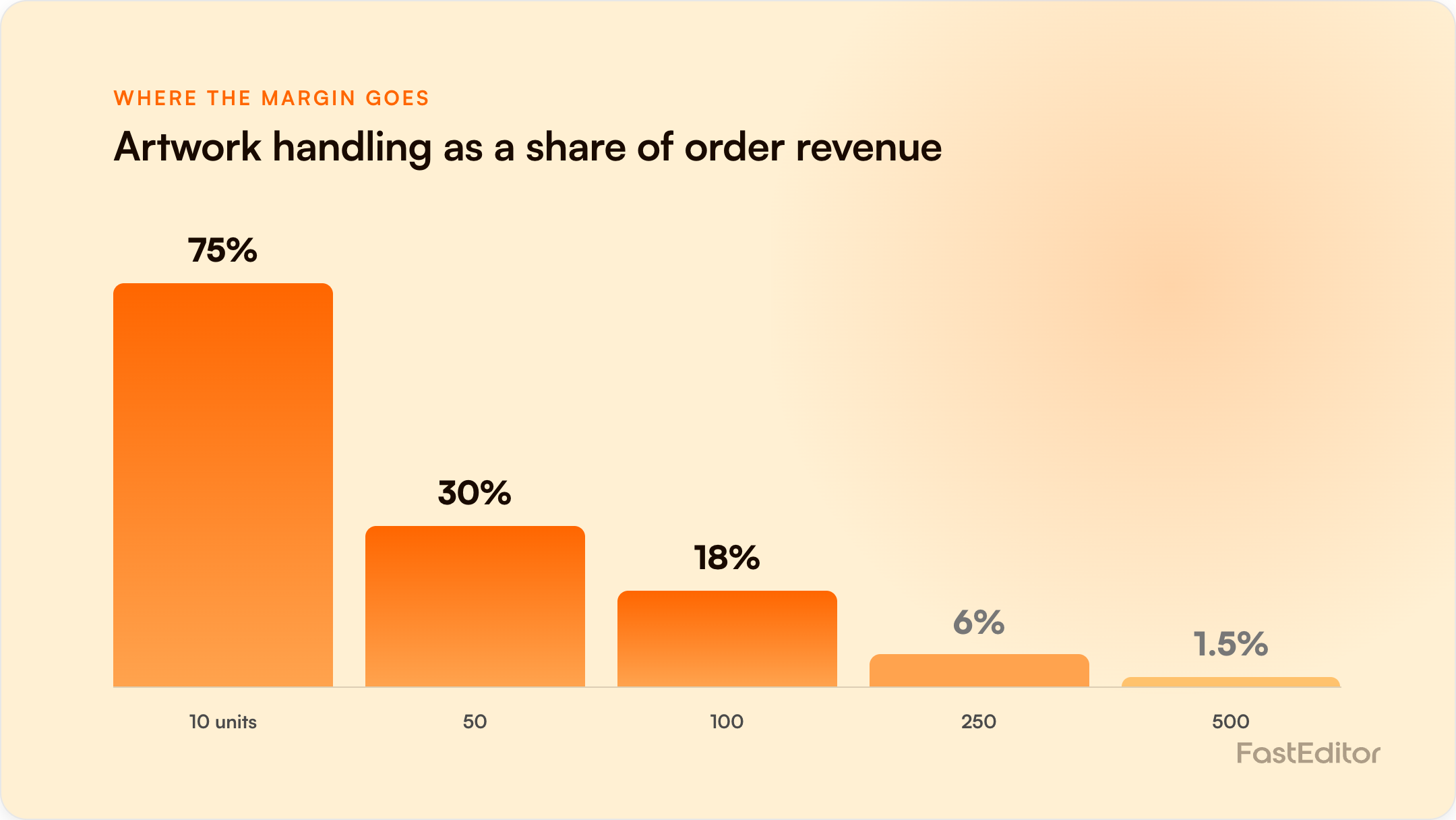
Artwork handling costs about the same whether you print 10 units or 500. That flat cost quietly turns many small orders into loss-makers. Here is the math.
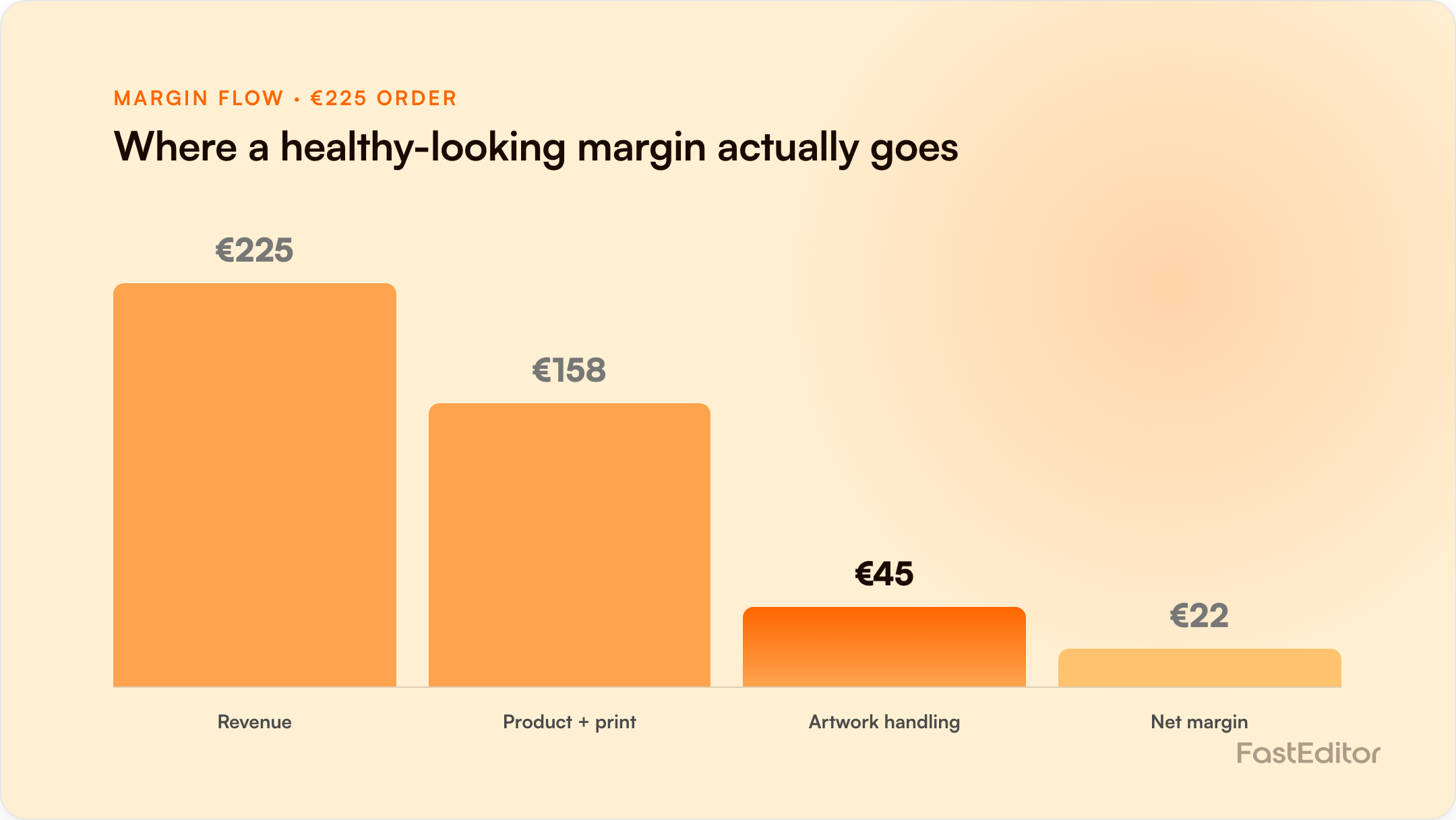
A healthy-looking 30% margin can collapse to 10% once artwork handling is paid for. Here is the full margin flow on a typical promotional product order.
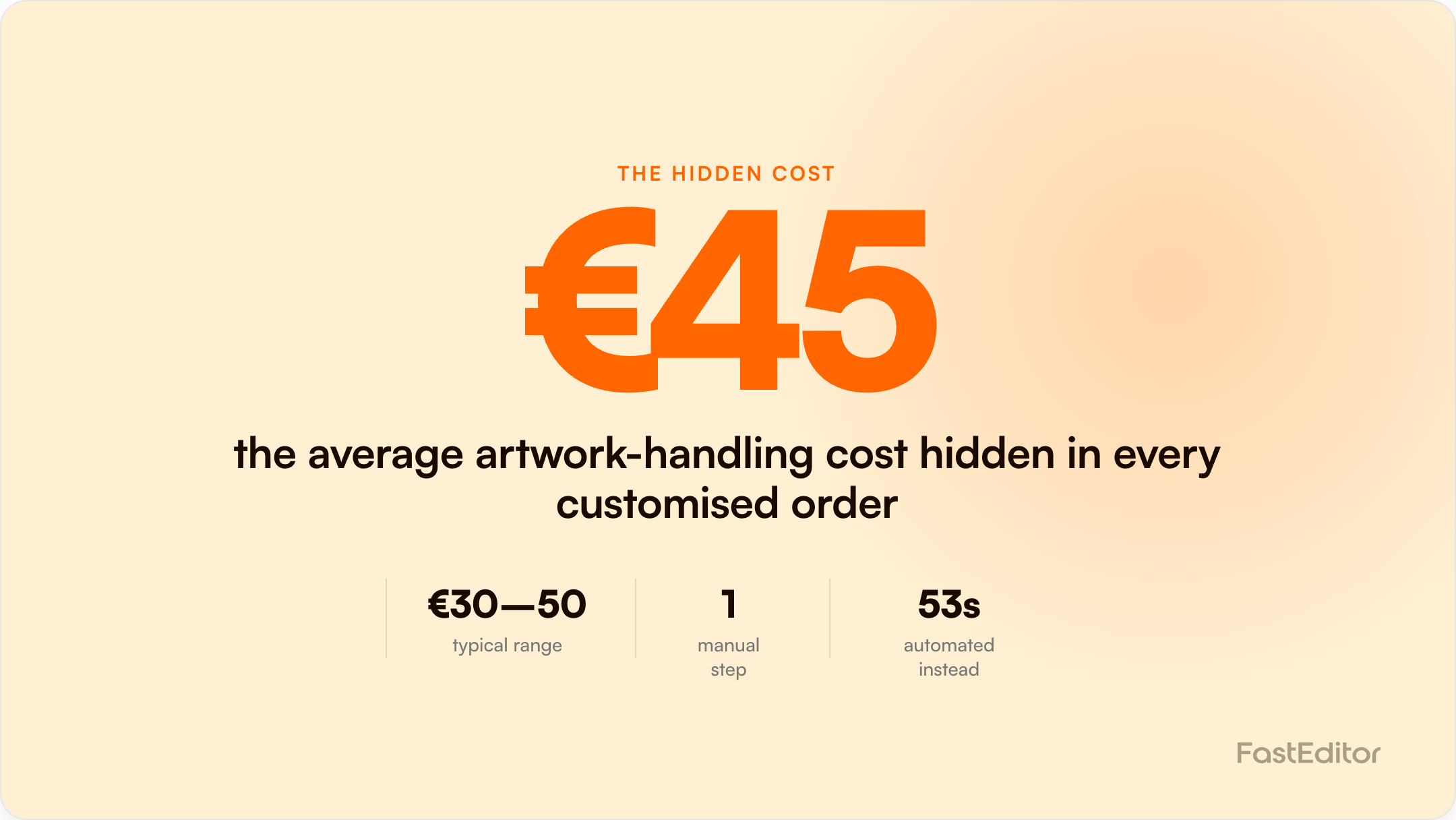
Every customised order carries a hidden artwork handling cost of €30 to €50. Here is the full breakdown of where €45 goes, from upload to production file.
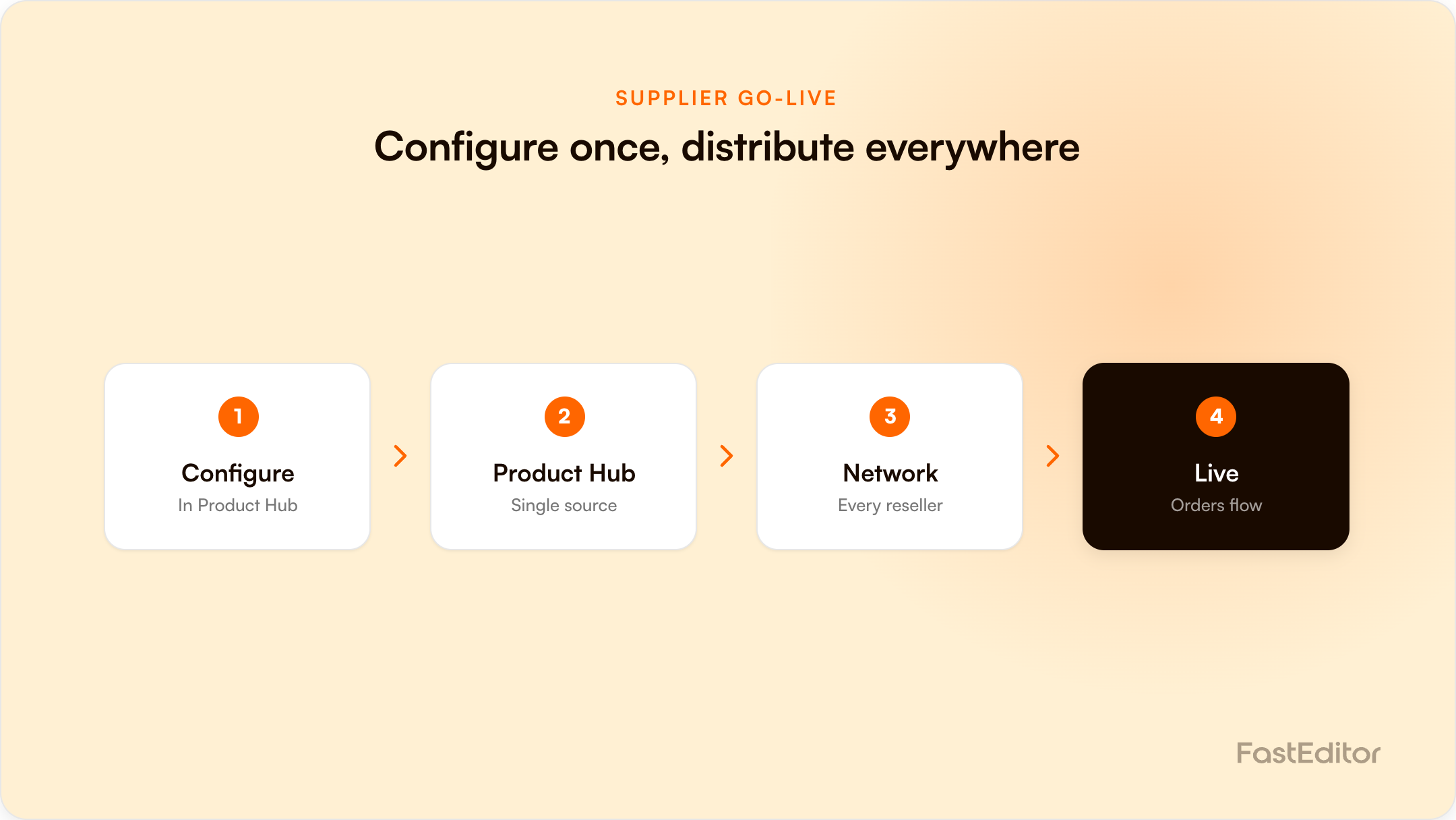
Going live is not relisting your catalogue per channel. Configure a product once in the Product Hub and it is distributed across the entire FastEditor network. Here is the playbook.
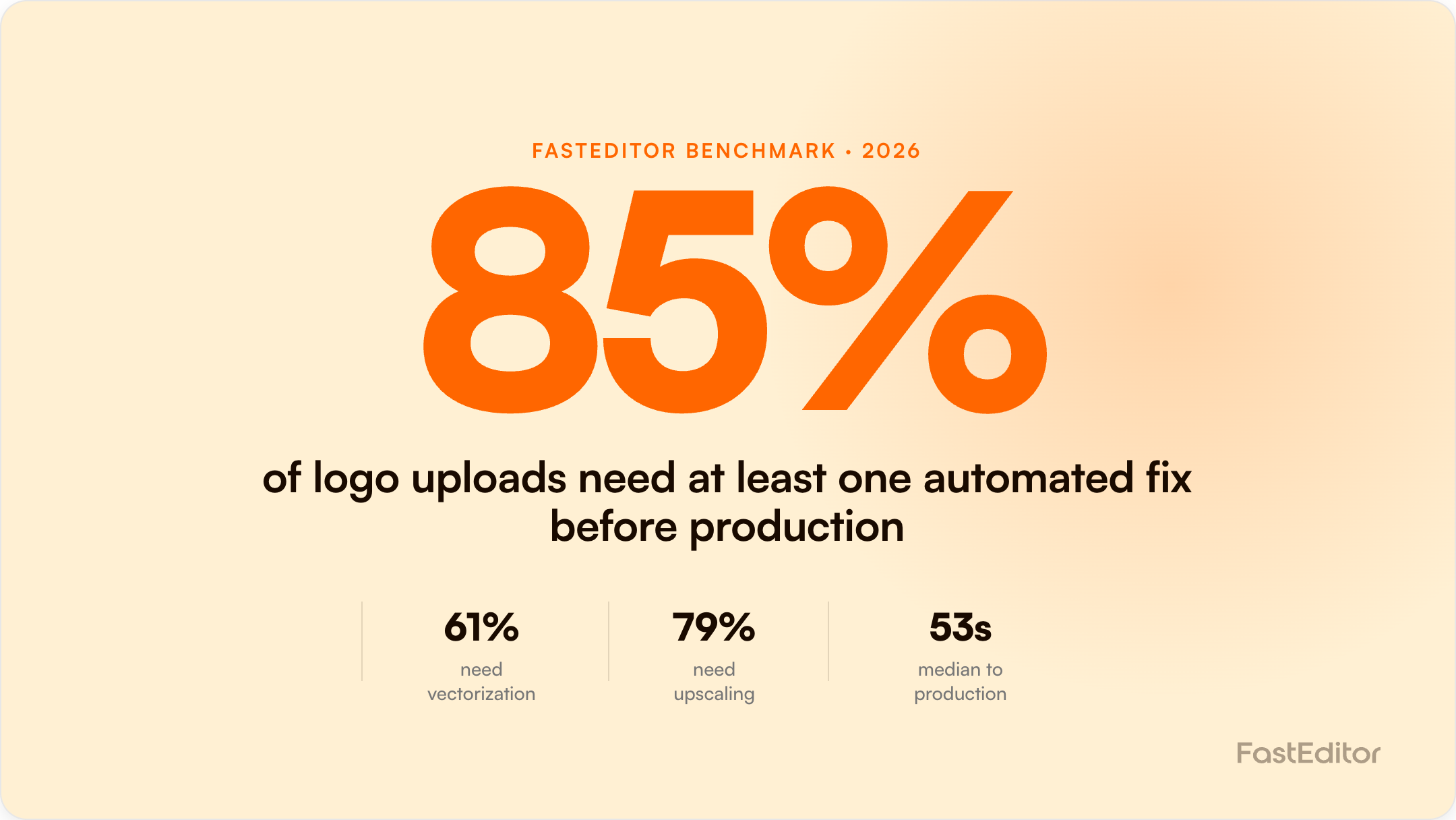
Updated platform data: across 32,435 logo uploads analysed, about 85% still need at least one fix (64% vectorization, 42% background removal, 83% upscaling on assessed raster uploads). Median upload-to-production-ready time: 52 seconds.

A walkthrough of how a customised product becomes a print-ready file in FastEditor (Create Smartlink, Add to Cart, Sale Notification, File Delivery), plus the gotchas that trip up integrators.
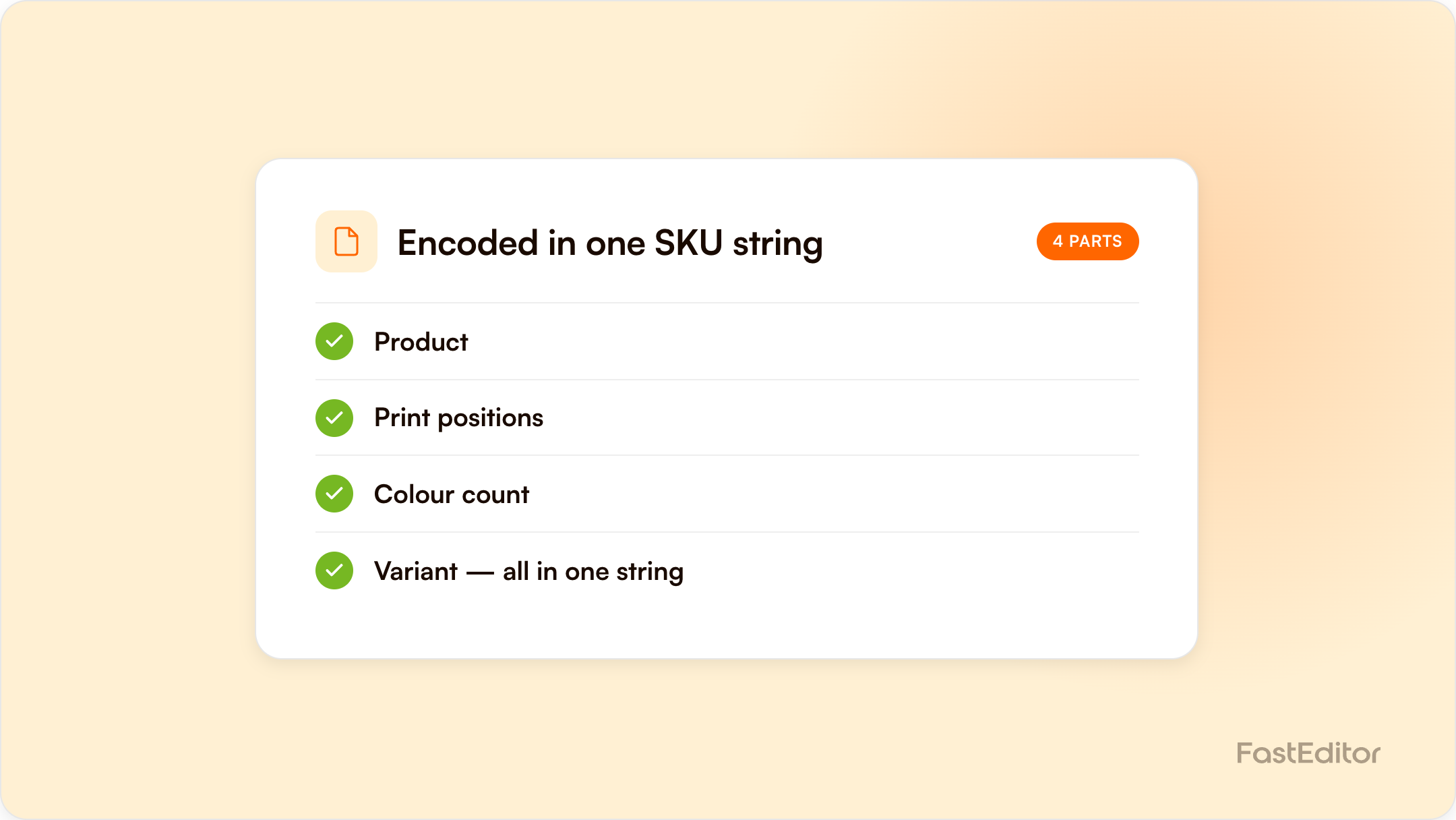
Platforms like WooCommerce demand one SKU per variant. Virtual SKUs encode a product, its print positions, and colour count in a single string so you can still offer full customisation.
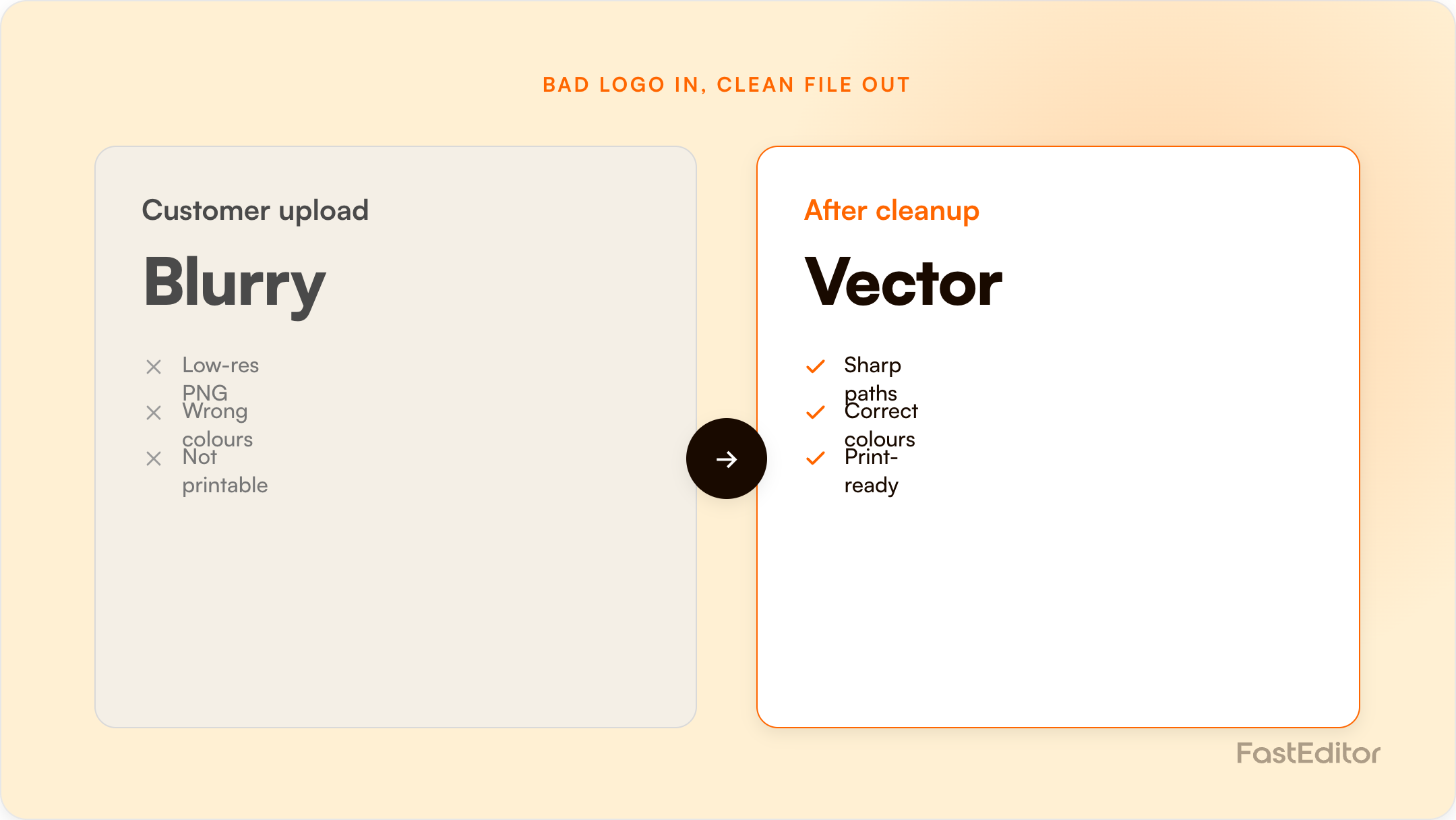
Customers never upload the right logo file, and the wait to fix it loses orders. Here is how automatic cleanup turns low-quality uploads into print-ready files and protects conversion.
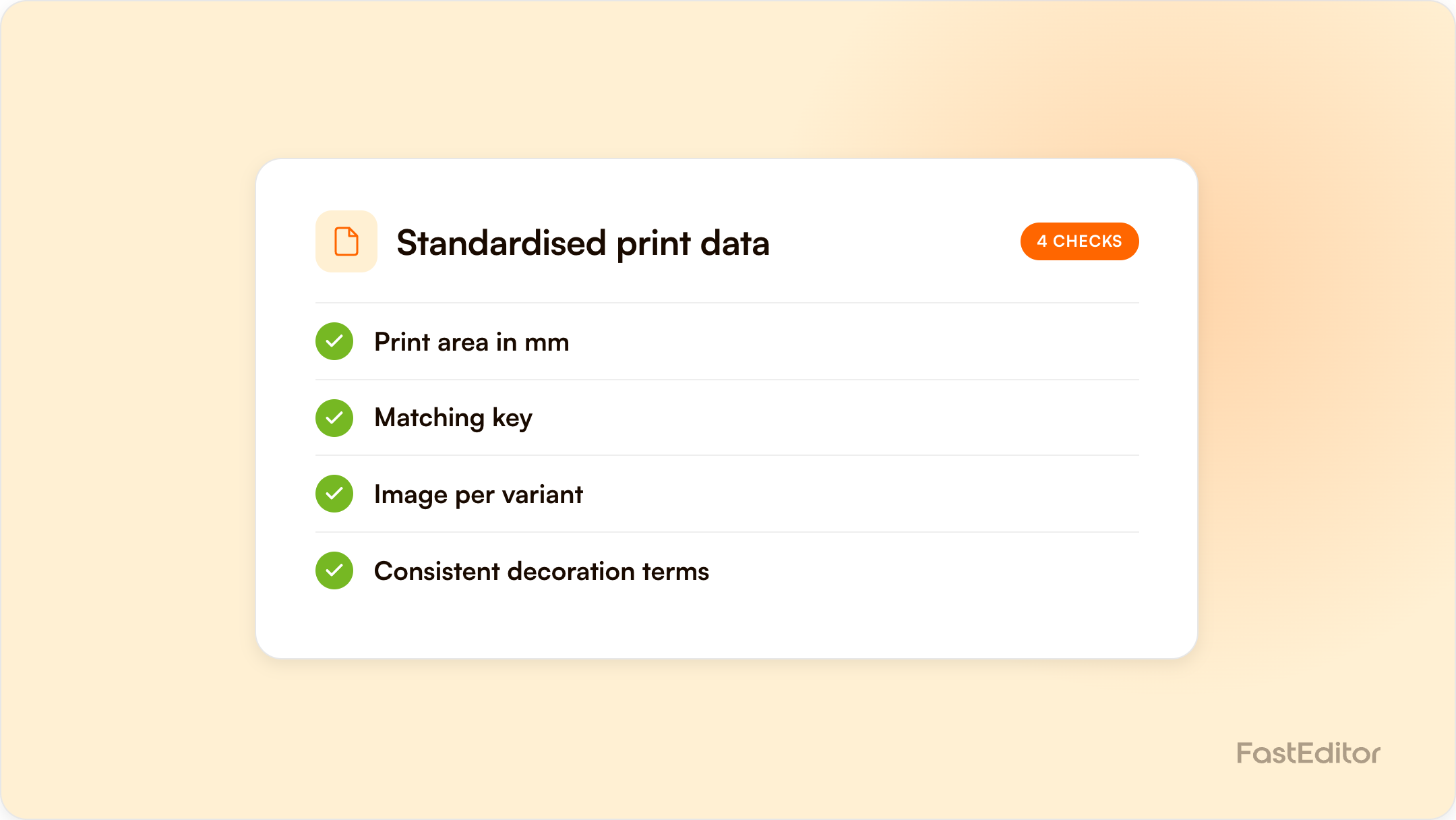
Missing or messy print data is the top reason products fail to go live. Here is what print data is, the problems that recur, and how to standardise it at catalogue scale.
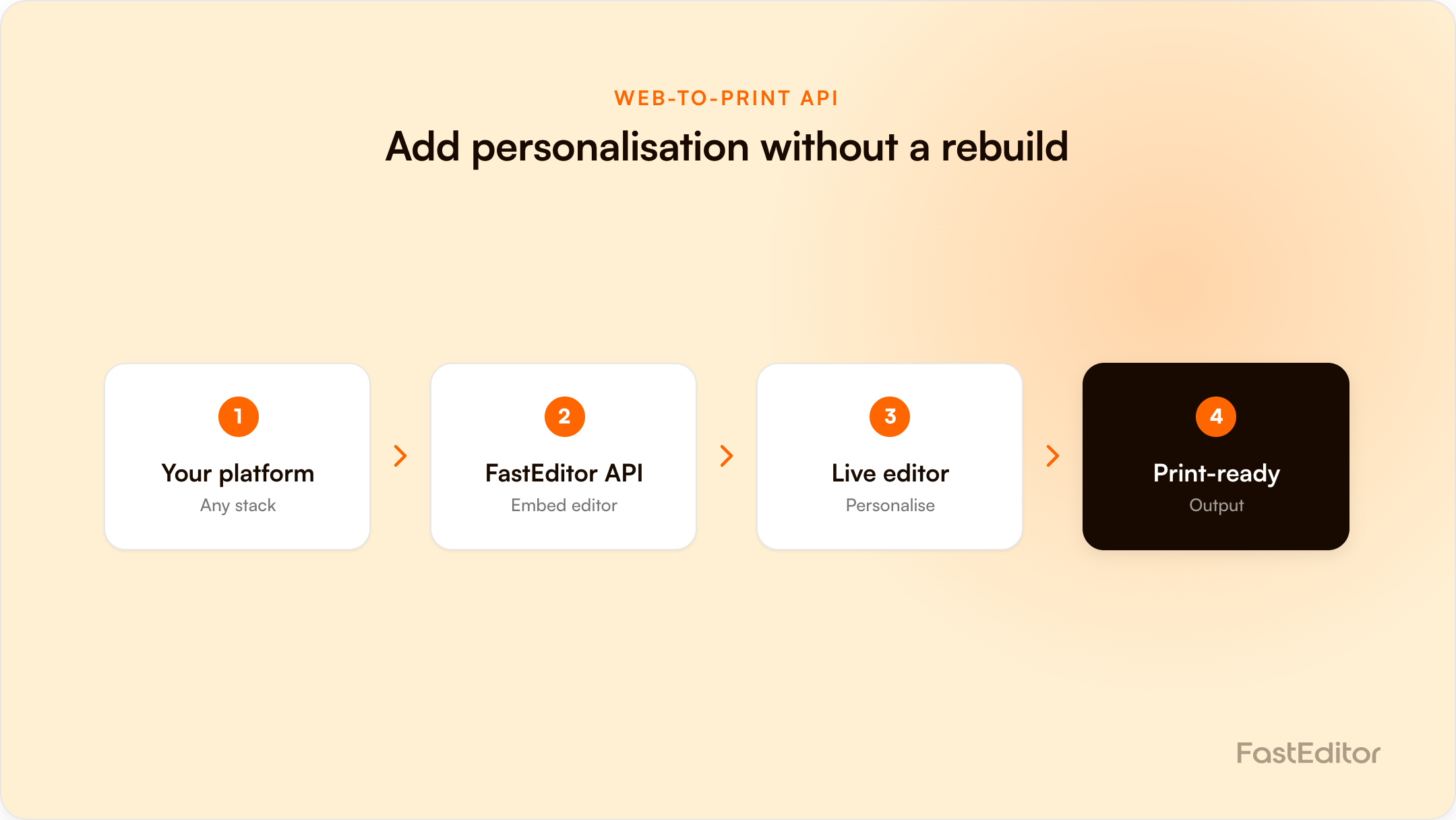
Add live personalisation and print-ready output to your platform without a rebuild. Here are the integration models, what the API does, and where projects go wrong.
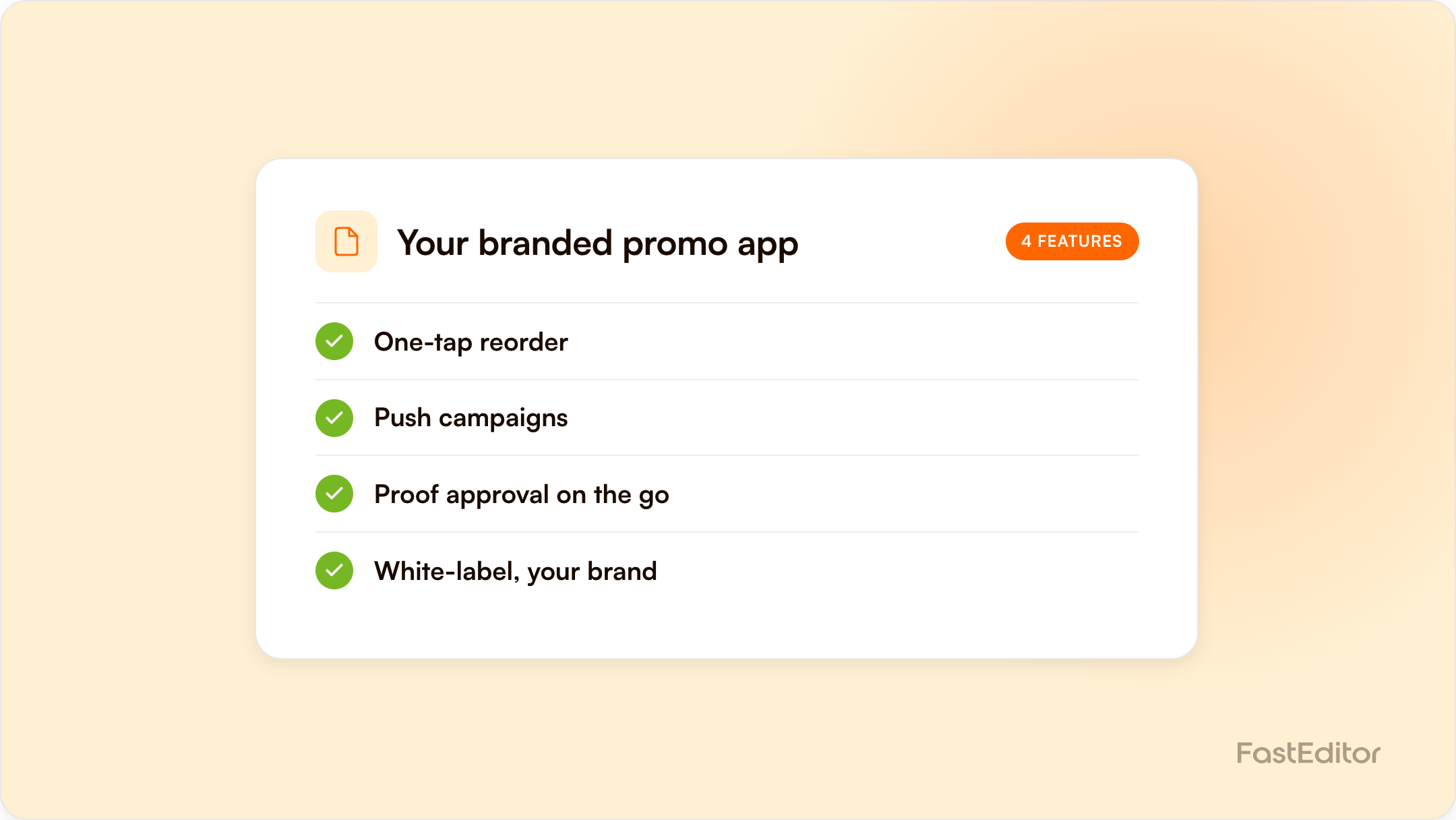
Your customers order everything else from apps. A branded promo app closes the gap with one-tap reorders, push campaigns and proof approvals on the go, and white-label means it carries your brand.
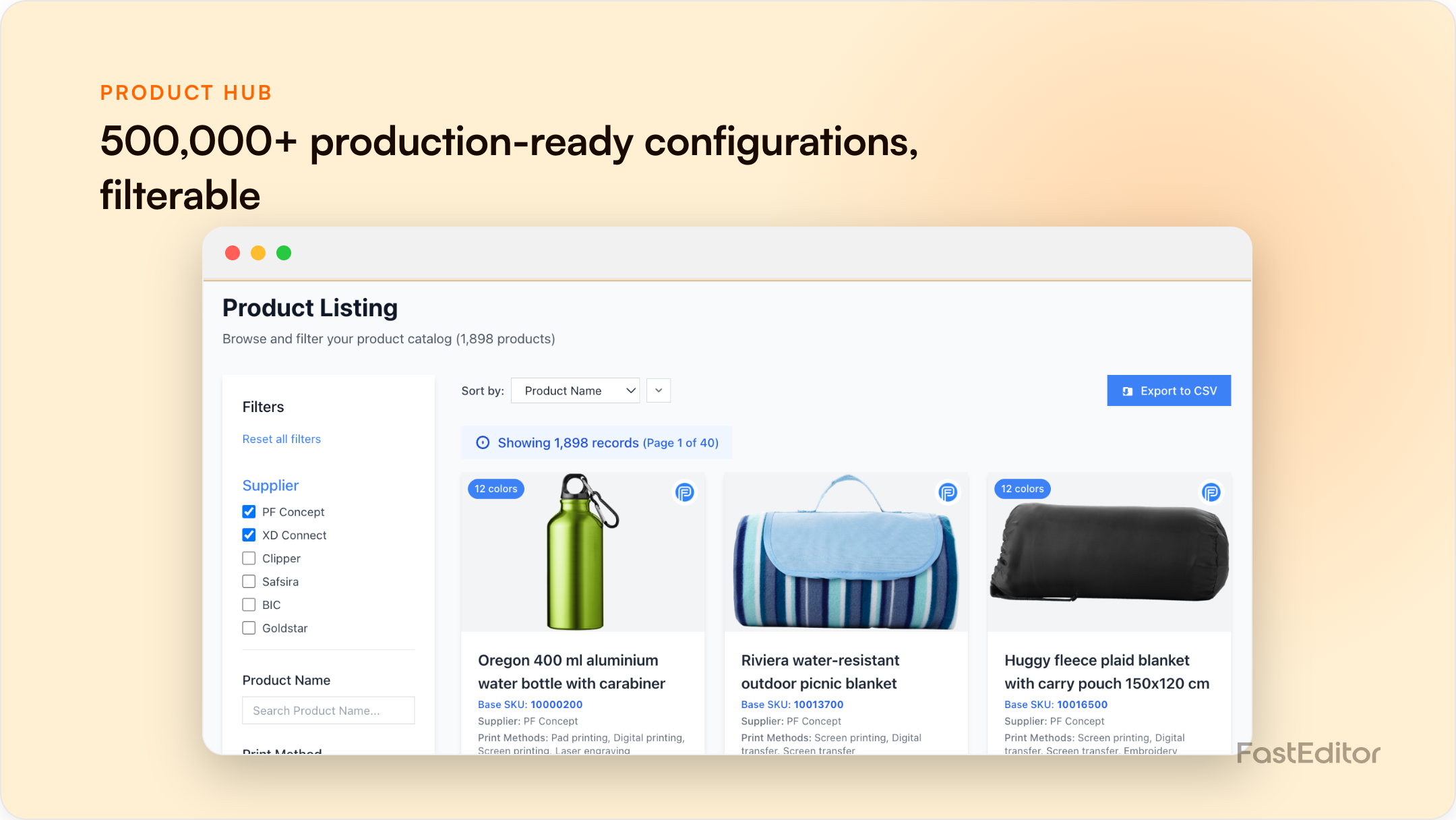
Spreadsheets and PDFs work until you handle 500 SKUs across 30 suppliers. How to choose promo catalogue software that holds real print data and feeds artwork automation.

A brand spends years on its exact shade of blue, then the mug arrives wrong. Here is why PMS matching is hard in promo, and how automation locks colours per decoration method.
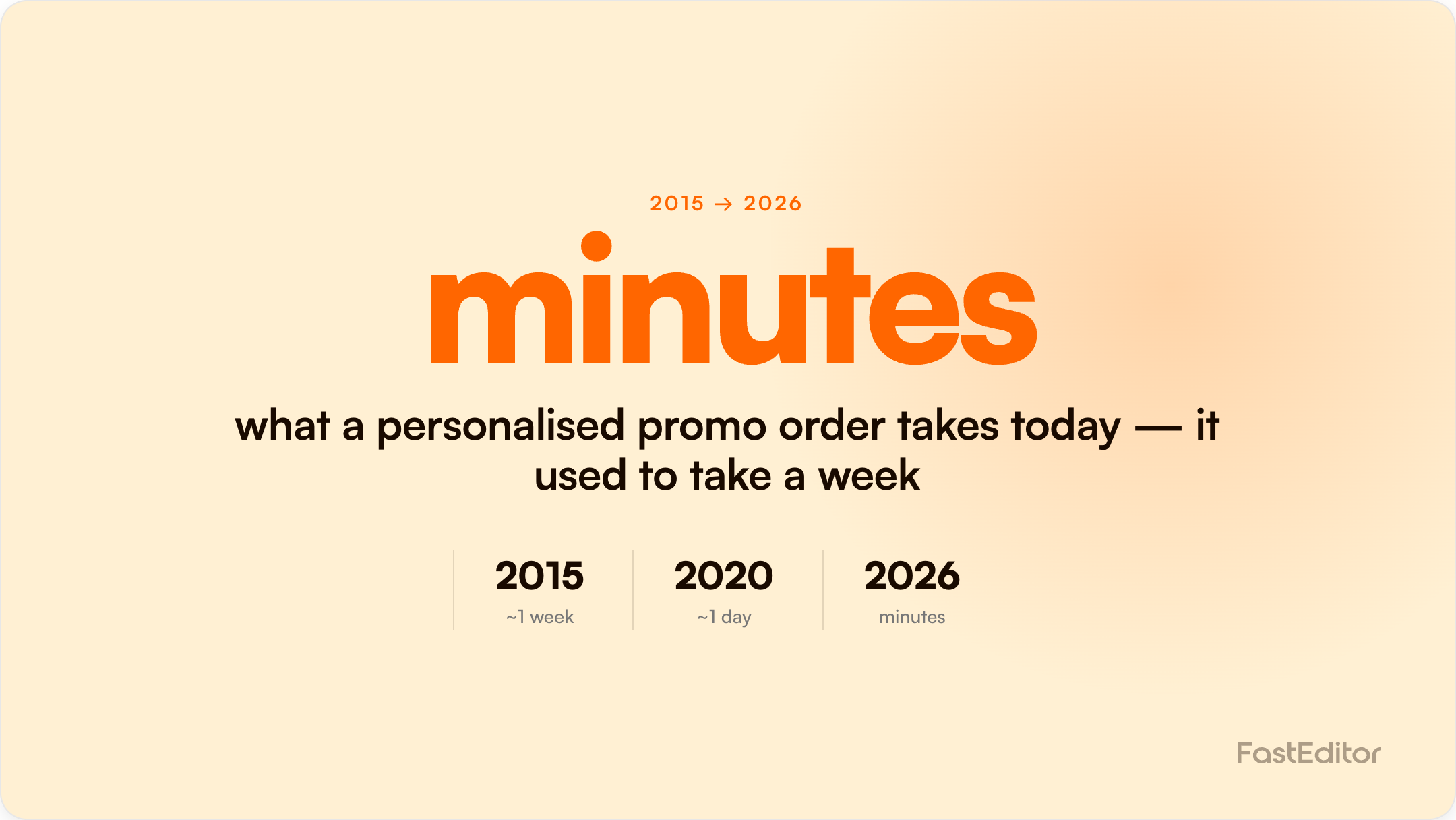
In 2015 a personalised promo order took a week. In 2026 it takes minutes. Here are the five trends building on that shift, each with a driver, a verifiable data point and a concrete action.
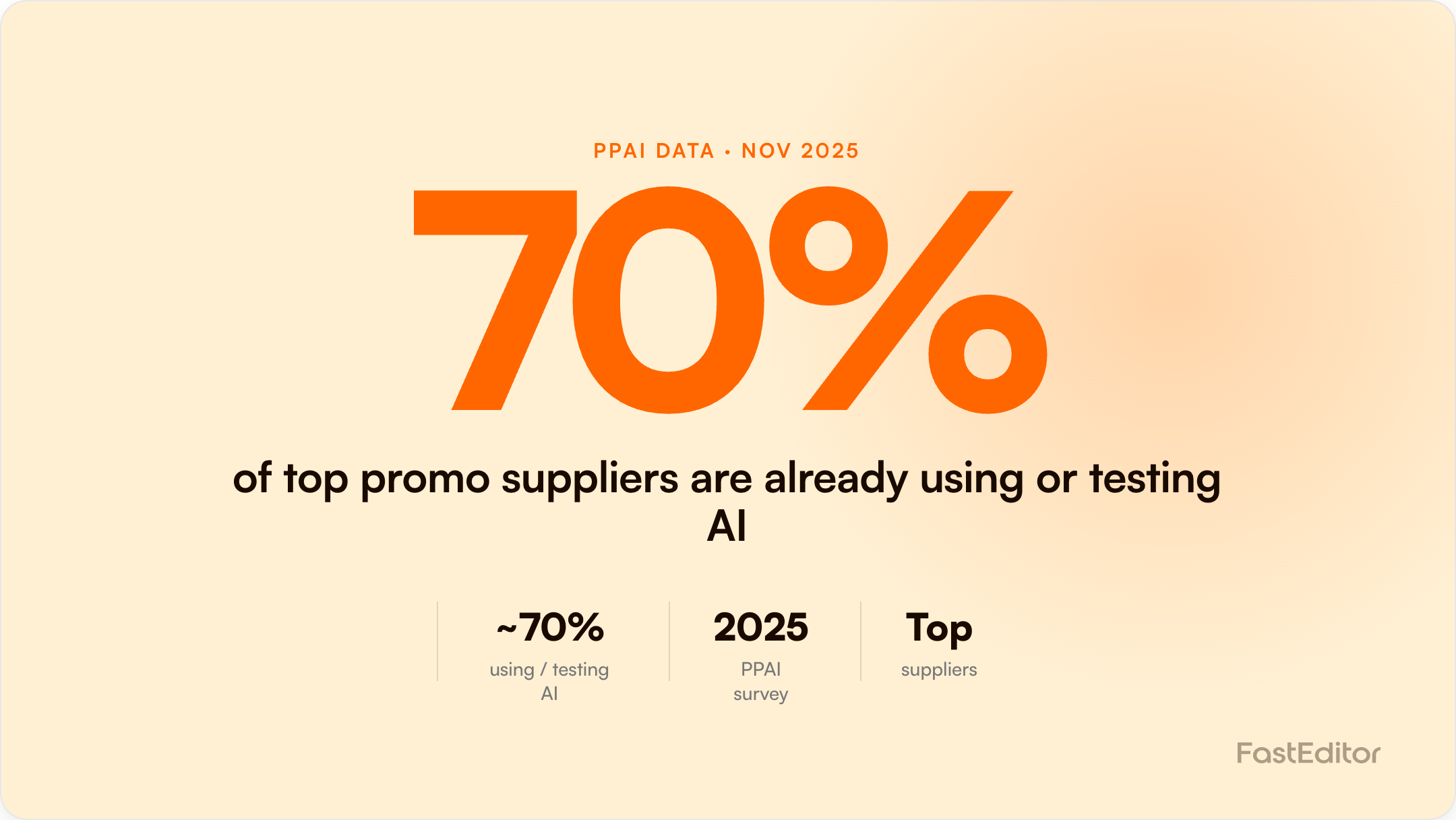
PPAI's November 2025 survey shows nearly 70% of top promo suppliers are using or testing AI. Here are the verified figures and where they point.
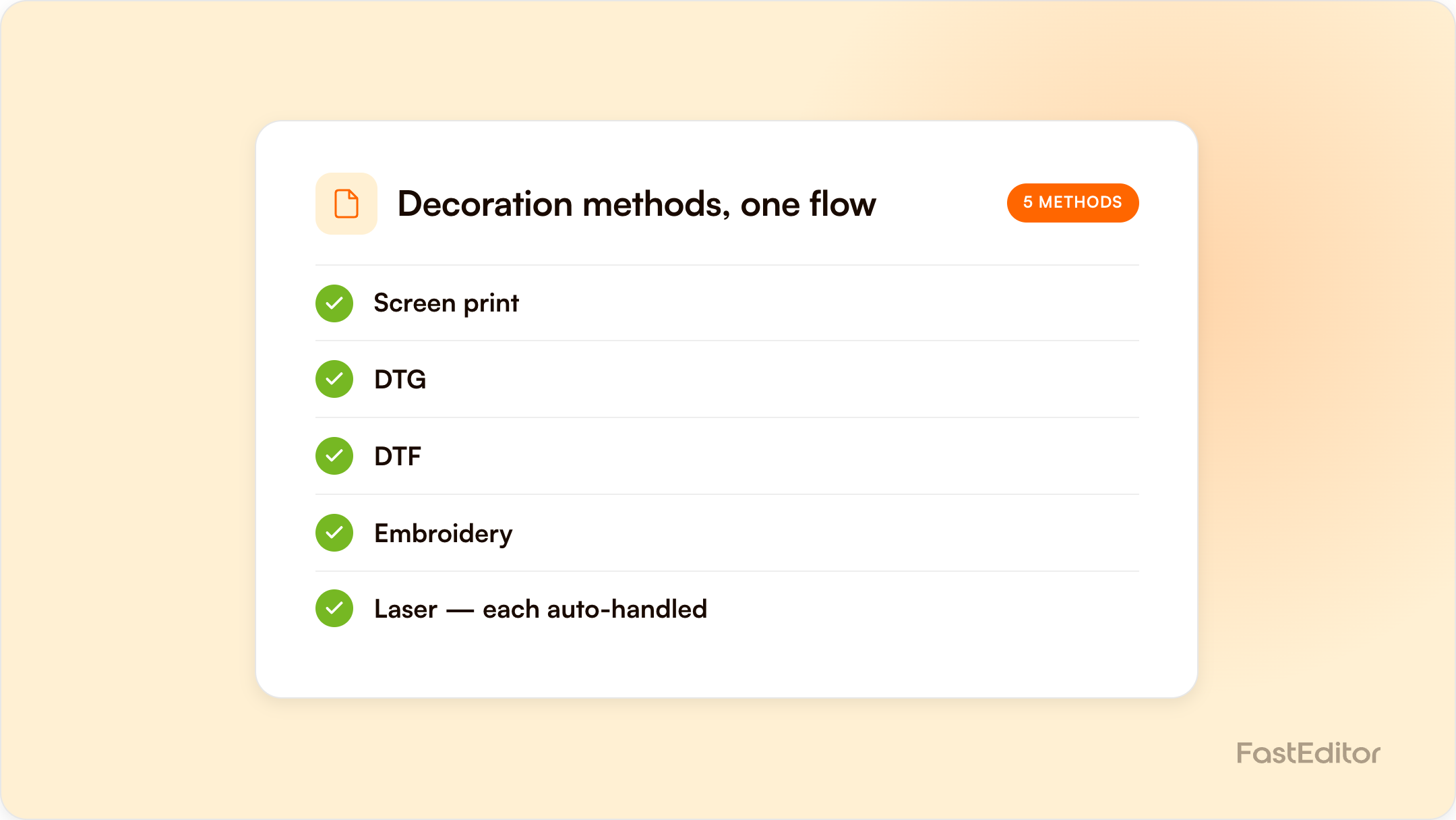
One order, three products, three decoration methods, each with its own file requirements. Here is the complete guide to promo decoration techniques and how automation handles every one.
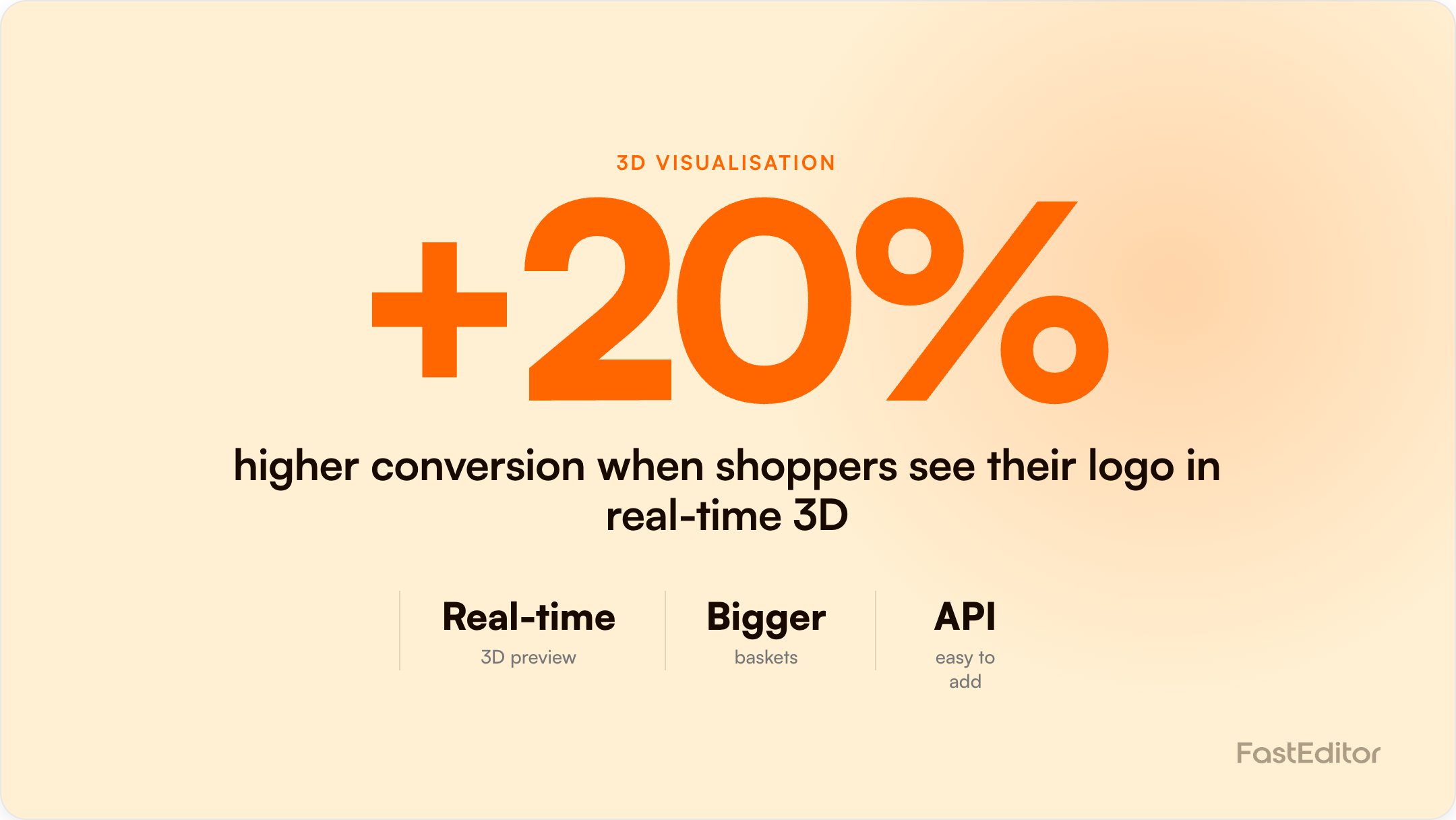
Customers who can see their logo on a product in real-time 3D buy more often and spend more. Here is the FastEditor data, the external research, the psychology, and how to implement it via API.
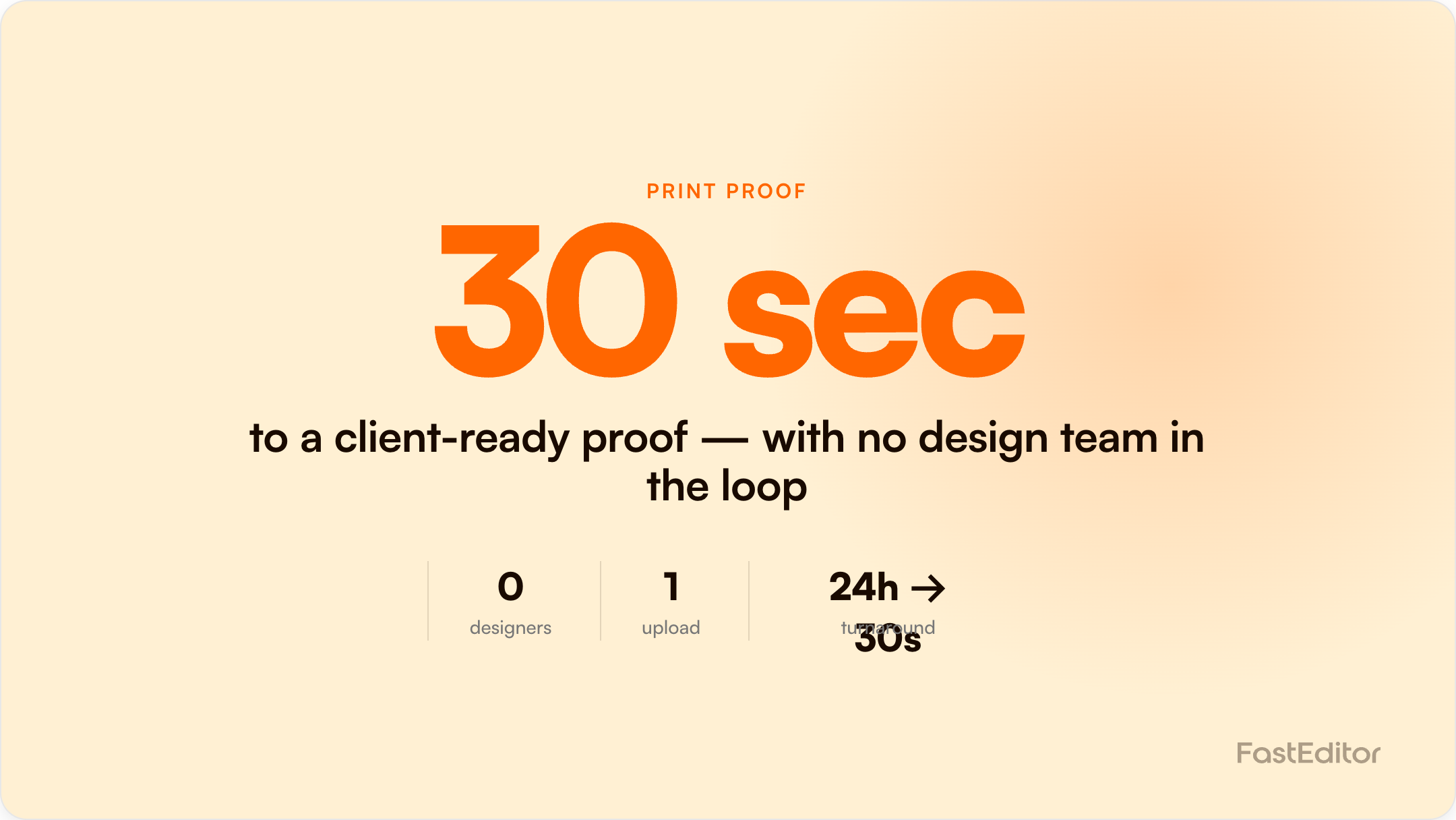
If your team needs 24 hours to show a client their logo on a product, you have probably already lost the sale. Here is the step-by-step 30-second alternative.
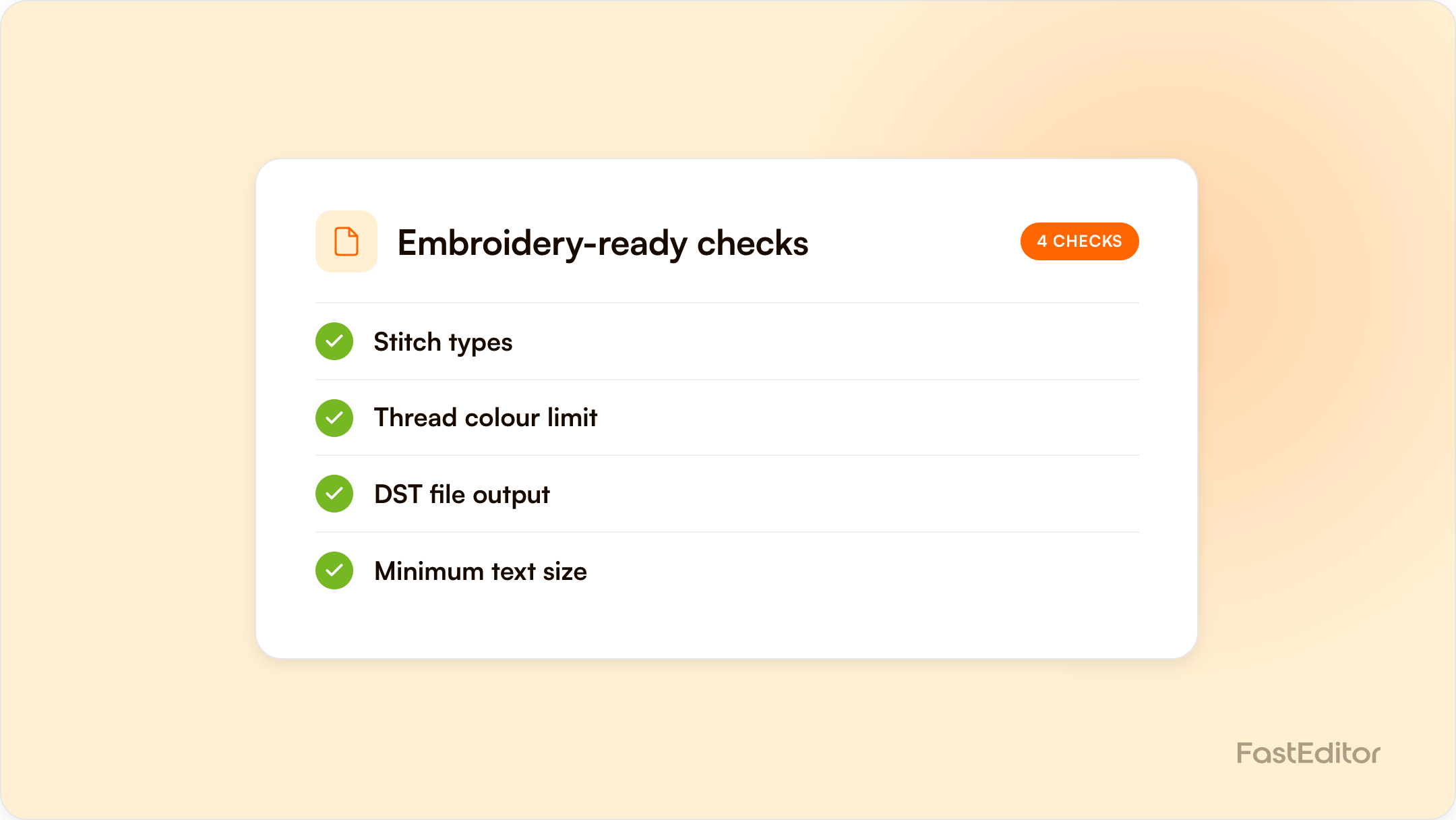
Logos that print perfectly often fail on an embroidery machine. Here are the specs, stitch types, and file formats every promo reseller should know, and how automation prevents the reprint.
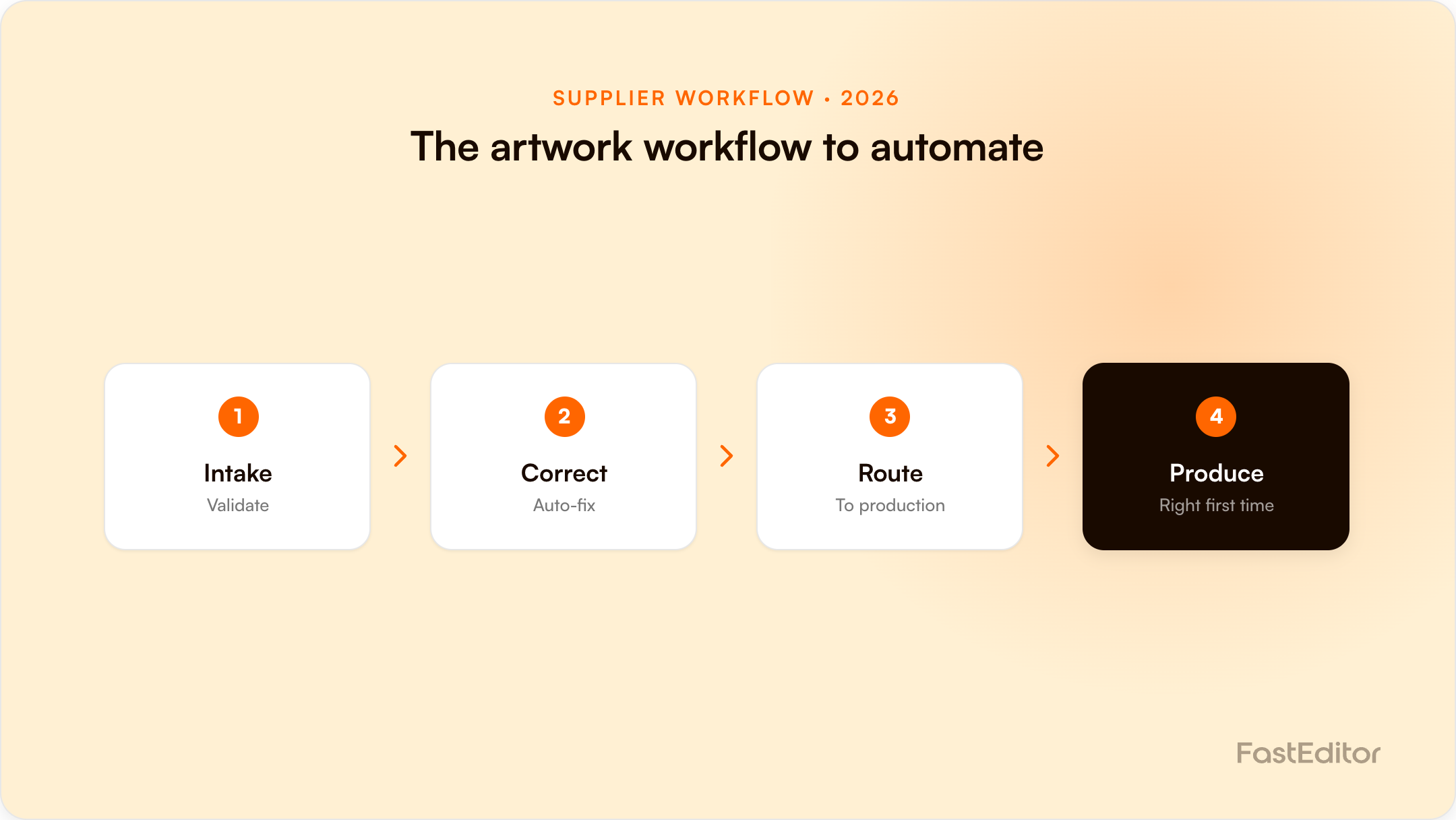
PPAI data shows top suppliers are already automating production workflows. Here is the artwork workflow to automate in 2026, from intake validation to file routing.
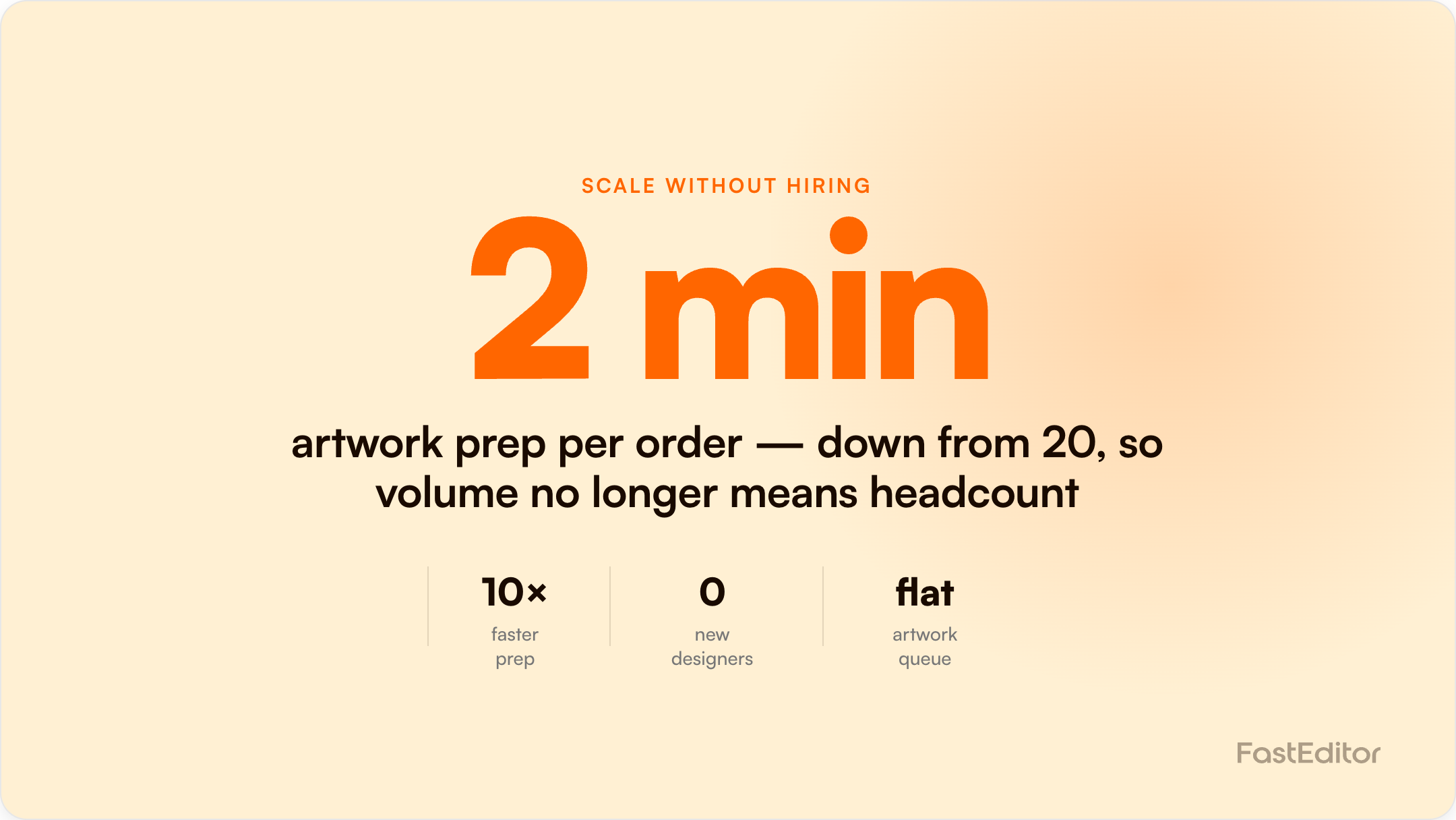
Every growing promo business hits the same wall: more orders, a bigger artwork queue. Here is how to scale by removing the bottleneck instead of adding headcount, with the real cost maths.
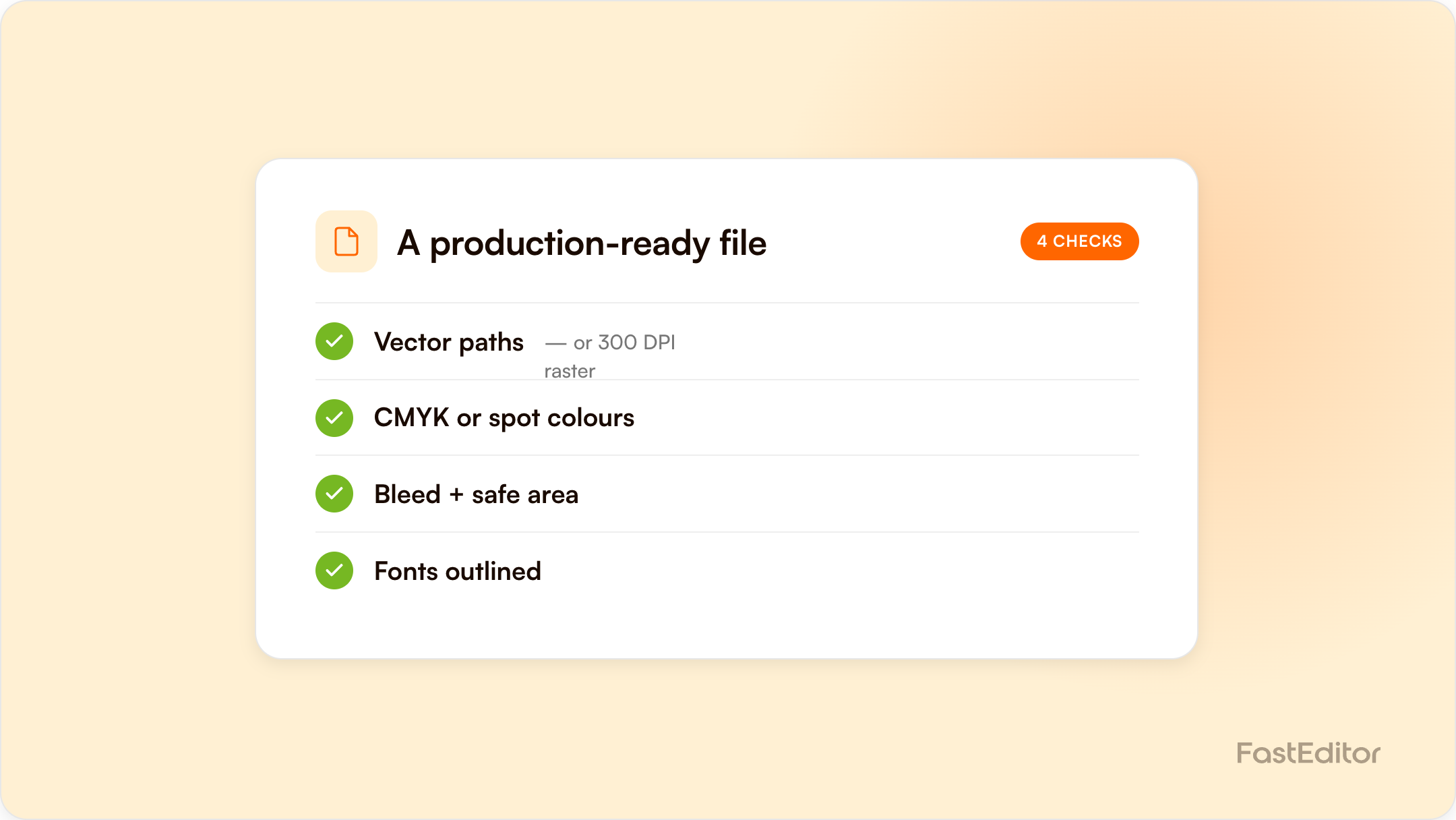
Most artwork files promo suppliers receive cannot go straight to production. Here is the precise definition of production-ready, the requirements per decoration method, and how automation enforces them.

Traditional promo ordering takes 5 or more touchpoints over days. Here is the same outcome in 4 automated steps, with the technical detail behind each one, in under two minutes.
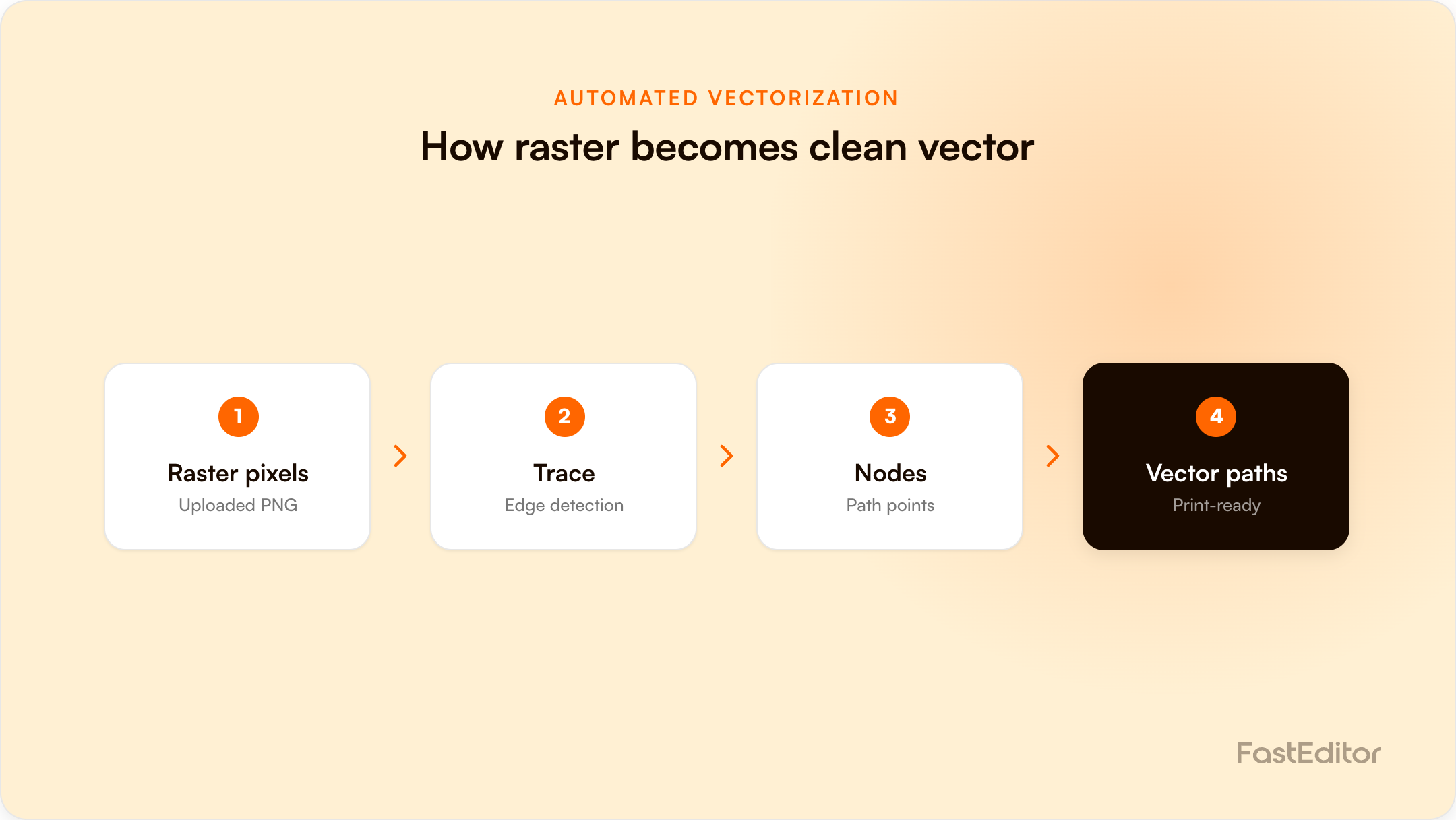
Customers upload raster logos; production needs vectors. Here is how automated tracing actually works, stage by stage, where it fails, and how to evaluate an engine.
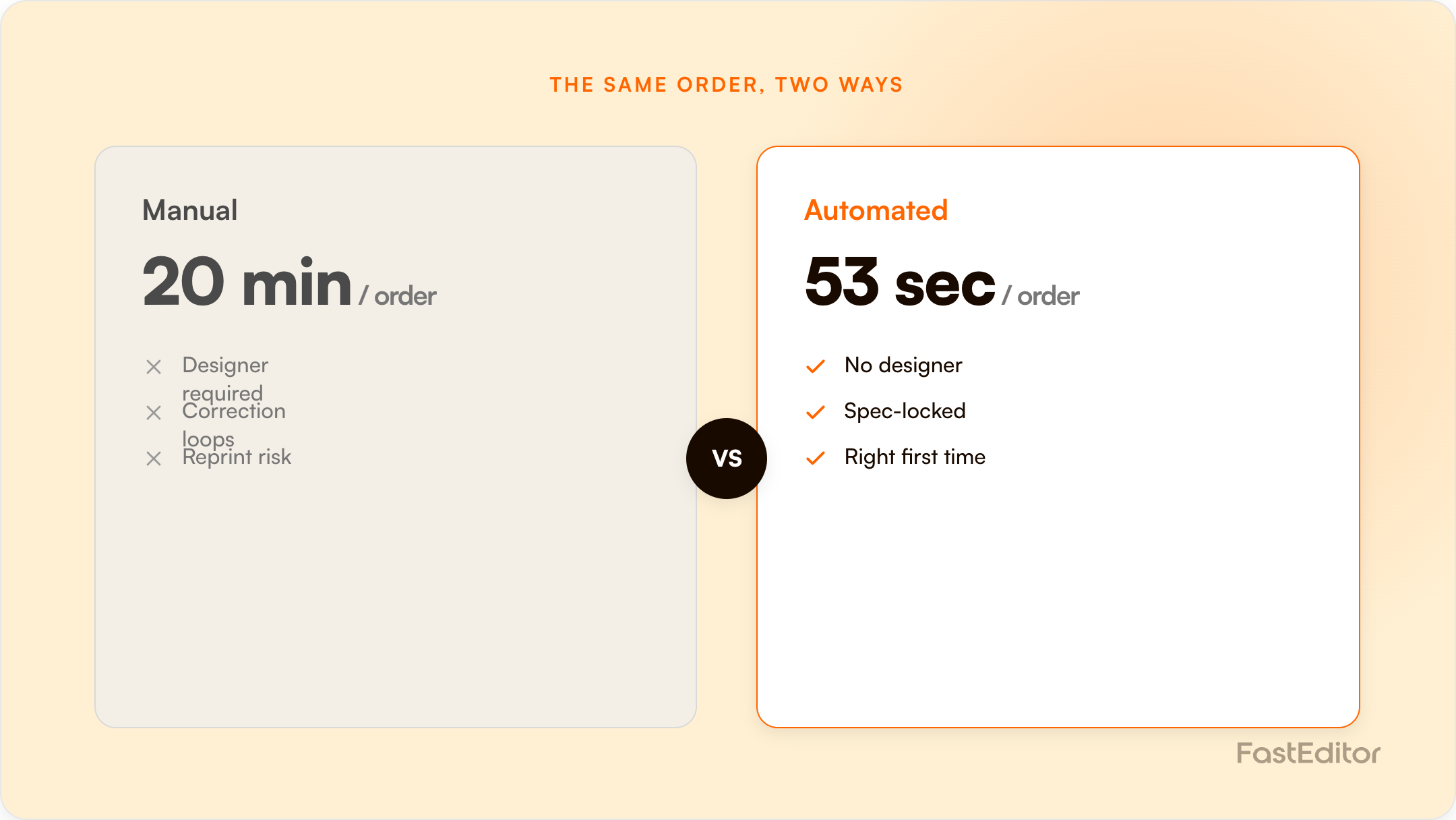
A transparent, line by line ROI comparison of manual artwork processing versus automation, with worked euro examples at 200, 500 and 1,000 orders per month and real payback maths.
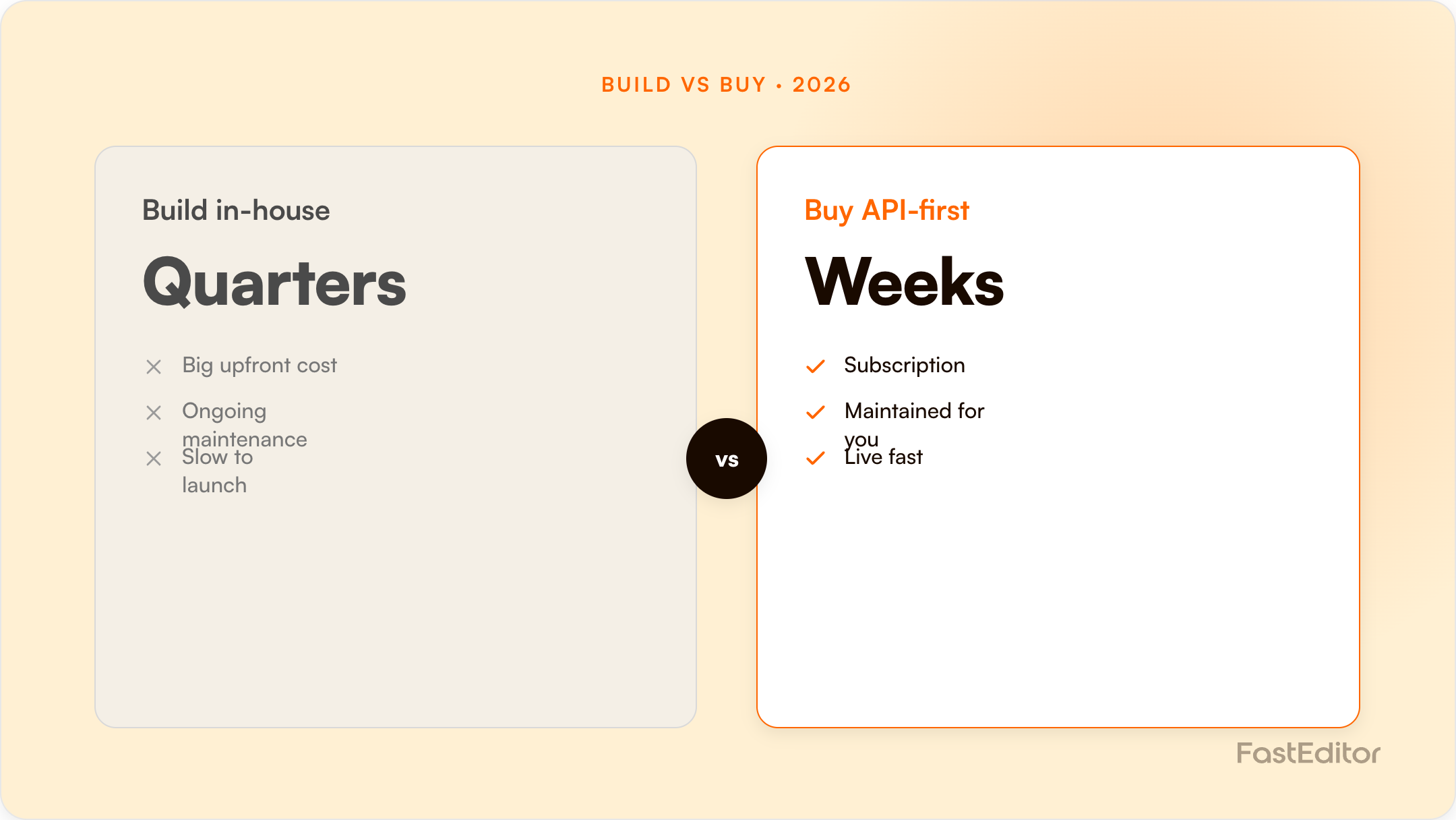
The real three year cost of building a product configurator in-house versus buying an API-first platform, with every assumption labelled and a decision checklist.
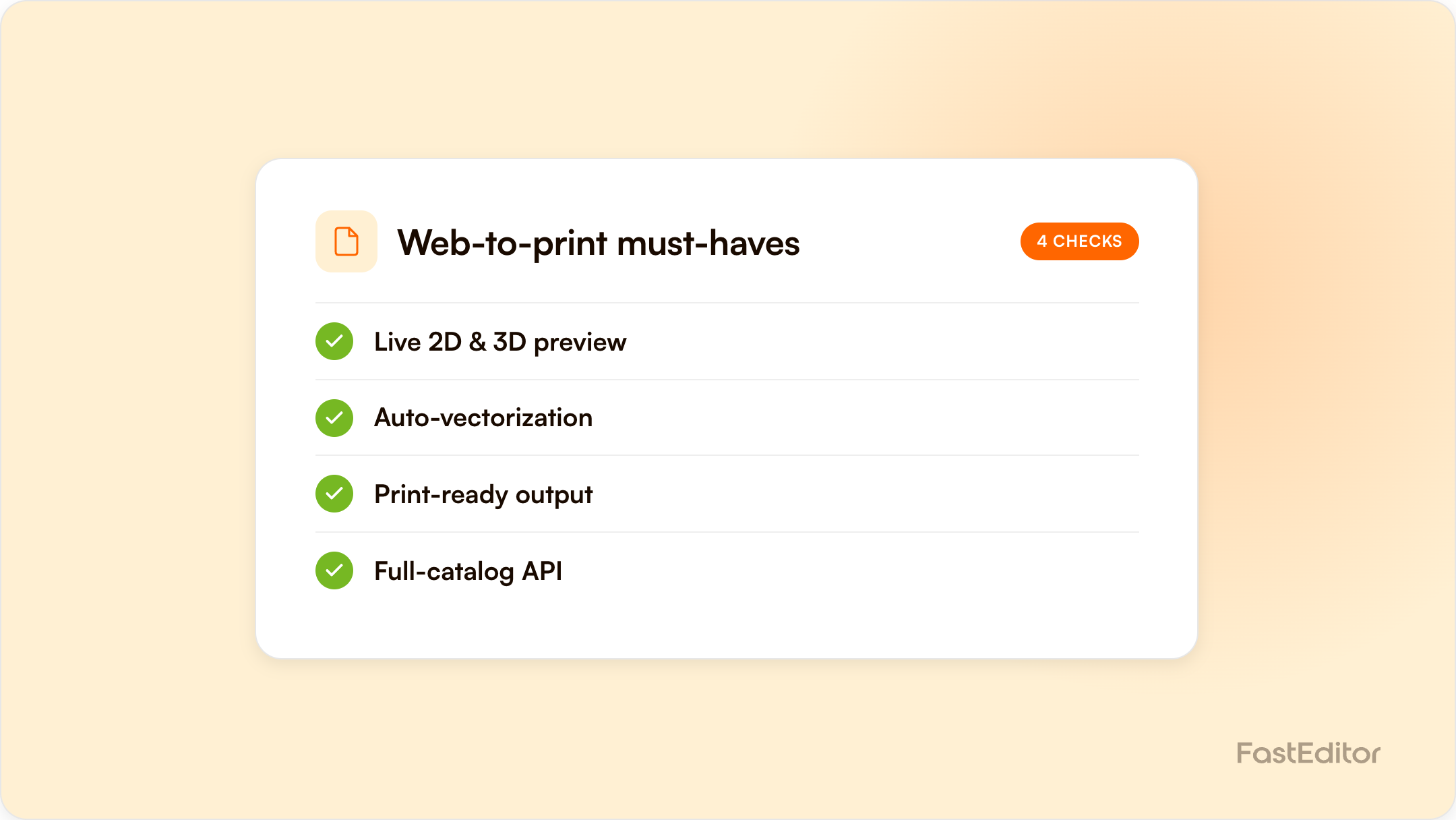
A practical buyer's guide to web-to-print software: the three vendor categories, verified price bands, the features that matter, and seven questions to ask every vendor.

Artwork automation removes the manual design work between an order and production. Here is what it is, how it works for each decoration method, and the business impact.